Alcohol & Nocturnal Hypoglycemia Risk Estimator
Estimate the duration of liver gluconeogenesis suppression caused by alcohol to protect against delayed overnight low blood sugar.
Alcohol Risk Estimator
1 drink = 12oz beer, 5oz wine, or 1.5oz spirits
Essential Safety Precautions:
- Never drink alcohol on an empty stomach. Always consume with a meal containing complex carbohydrates and protein.
- Check blood sugar before bed. Aim for a safe cushion of 140–180 mg/dL (7.8–10.0 mmol/L).
- Ask your care team before taking correction insulin at bedtime after drinking: lows can come hours later.
- Keep fast-acting glucose (gel or tabs) on your nightstand.
- Note that glucagon emergency injections may be ineffective while the liver is clearing alcohol.
Clinical Guidelines & References: Alcohol Ingestion and Glucose Homeostasis in Diabetes (Endocrine Reviews)
Reminders at the times you pick
Set reminders in T1dApp for insulin and medication, and keep every bedtime reading in your diary.
iOS App Store
T1dApp
Apple Health sync · Dexcom & Libre
Clinical Guidelines & Practical Guide
Understanding how this metric fits into comprehensive diabetes and glycemic management is critical for avoiding complications. This calculator uses published formulas and the ranges set out in guidelines such as the American Diabetes Association (ADA) Standards of Care. The sources are listed on this page.
Why This Calculation Matters
Blood sugar is dynamic and influenced by digestion, stress hormones, illness, and medication timing. Tracking standardized metrics prevents emotional decision-making and dangerous insulin stacking.
Standard Clinical Targets
For non-pregnant adults with diabetes: Fasting glucose 80–130 mg/dL (4.4–7.2 mmol/L), post-meal peak < 180 mg/dL (10.0 mmol/L), and A1C < 7.0% (53 mmol/mol) unless individualized by a provider.
When to Contact Your Physician
- Readings repeatedly over 250 mg/dL (13.9 mmol/L) accompanied by moderate or large urine/blood ketones.
- Unexplained, recurrent hypoglycemia (< 70 mg/dL / 3.9 mmol/L) or any hypoglycemic episode requiring third-party assistance.
- Planning pregnancy, surgery, or adjusting long-acting basal insulin regimens.
Medical Disclaimer: This digital calculator is an educational and informational tool intended to support healthy living and data logging. It is not medical software, an automated dosing algorithm, or a substitute for personal clinical judgment. Always consult an endocrinologist or certified diabetes educator before adjusting medication dosages.
Related Diabetes Calculators
Calculator
Post-Meal Spike Evaluator
Measure the exact glycemic delta between your pre-meal baseline and 1-hour or 2-hour postprandial readings.
Calculator
Net Carbs Calculator
Calculate true glycemic carbohydrate load by deducting insoluble fiber and adjusting for partial sugar alcohol absorption.
Calculator
Glycemic Load Calculator
Compute the real-world Glycemic Load of a meal serving by combining Glycemic Index with total available carbohydrates.
Companion app for iPhone
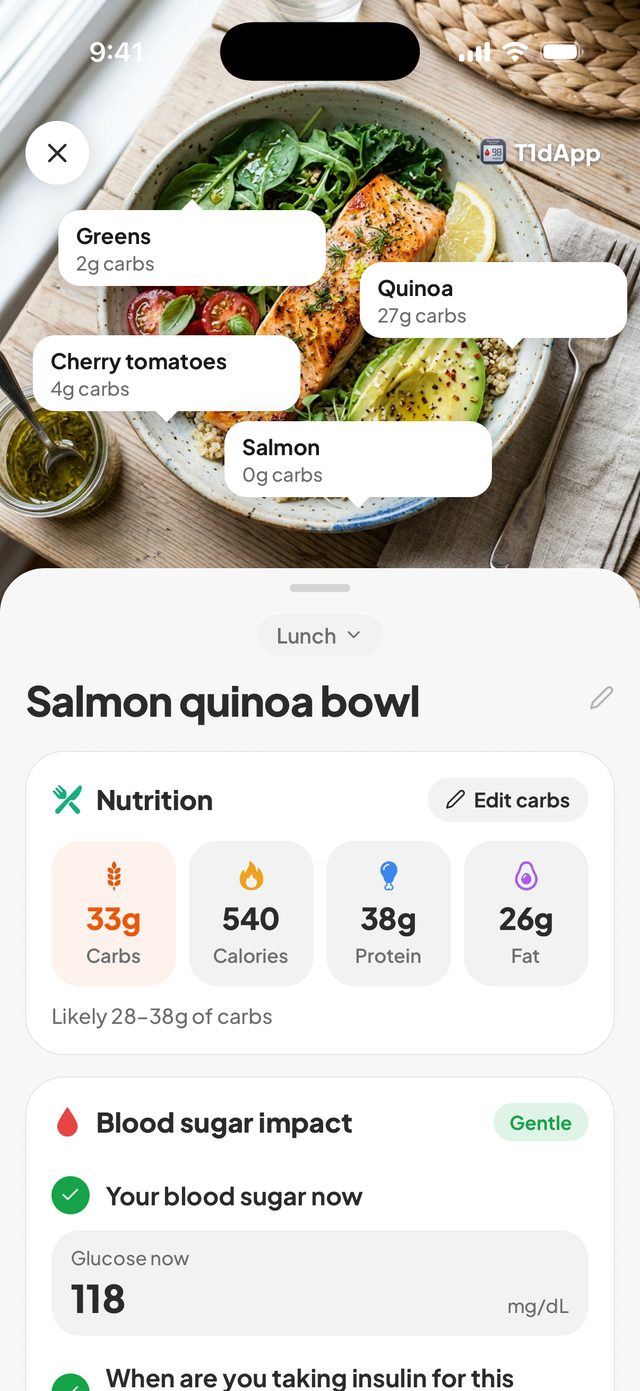
Snap your meals and see what they do to your blood sugar
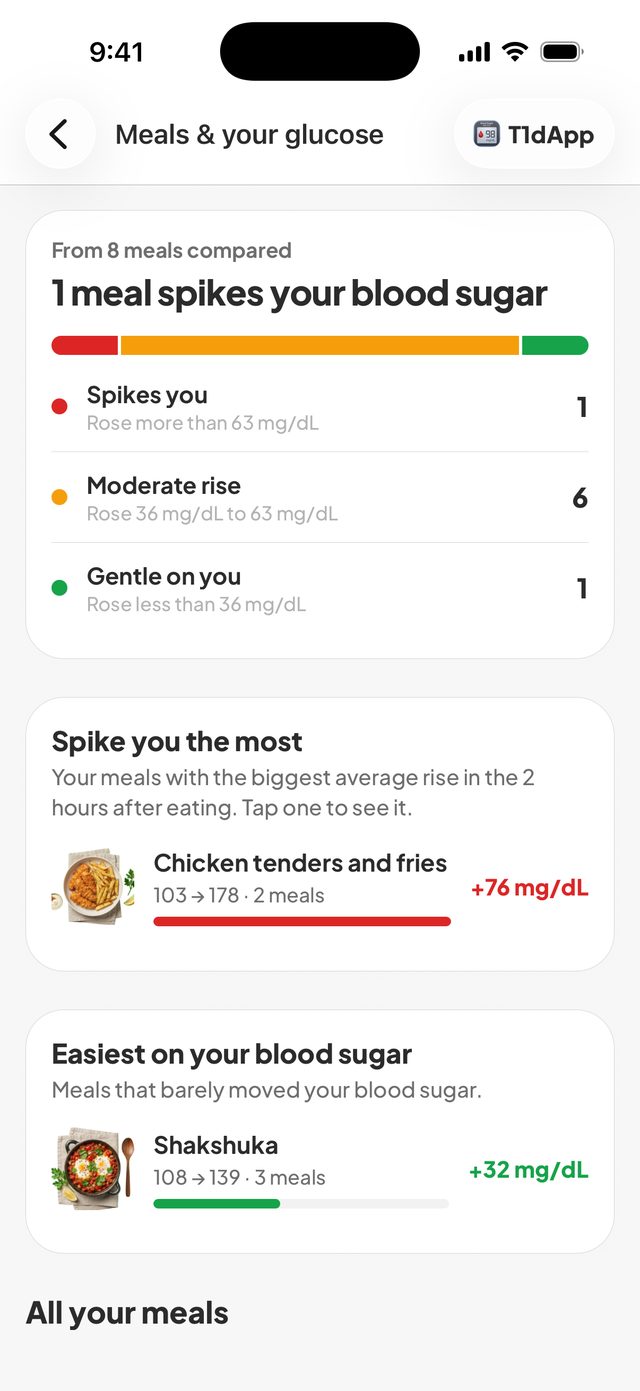
T1dApp turns food photos and glucose readings into clear, everyday patterns. Get carbs in seconds, an estimate of your blood sugar 2 hours later, and Dexcom and Libre readings through Apple Health.
- Snap meals with AI: see carbs, calories, and an expected 2-hour glucose range.
- Apple Health sync: import Dexcom and FreeStyle Libre CGM readings automatically.
- Meal impact insights: see which foods spike your blood sugar and which barely move it.
- Estimated A1c & reports: export clean PDF or CSV summaries to hand your care team.
iPhone & iPad · Built for Type 1, Type 2, and Prediabetes