Prediabetes Symptoms: The Signs Most People Never Notice
The honest headline is that prediabetes usually causes nothing. Roughly 1 in 3 US adults has it and around 8 in 10 of them do not know. Here is what does show up, and who should be tested regardless.
Written from lived experience, not clinical training, and checked against the clinical guidance listed below. Not yet reviewed by a named clinician.
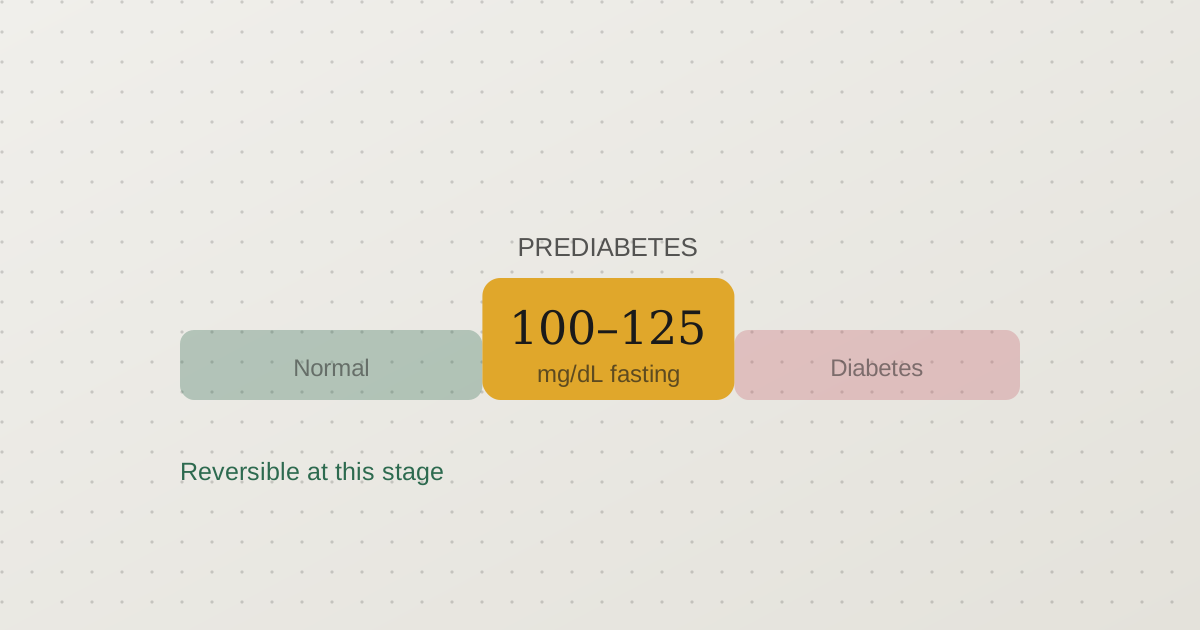
The most useful thing to know about prediabetes symptoms is that there usually are none.
That is not a throwaway line. Roughly 1 in 3 US adults has prediabetes, and around 8 in 10 of them do not know it. Those people are not ignoring warning signs. They mostly do not have any to ignore.
This guide covers what does show up in the minority who notice something, who should be tested regardless of how they feel, and why catching it matters more than almost any other early finding in medicine.
What prediabetes actually is
Prediabetes means blood glucose is consistently higher than normal but not high enough to meet the threshold for diabetes. Specifically, any one of:
| Test | Prediabetes range |
|---|---|
| Fasting glucose | 100–125 mg/dL (5.6–6.9 mmol/L) |
| A1c | 5.7–6.4% |
| 2-hour glucose tolerance test | 140–199 mg/dL (7.8–11.0 mmol/L) |
Underneath the numbers, the mechanism is insulin resistance. Your cells respond less readily to insulin, so the pancreas compensates by producing more. For years that compensation works and glucose stays near normal. Prediabetes is the stage where the compensation is starting to fall behind.
Why it is nearly silent
The classic high blood sugar symptoms — raging thirst, frequent urination, blurred vision — depend on a threshold. Above roughly 180–200 mg/dL (10–11 mmol/L), the kidneys can no longer reabsorb all the glucose passing through them, so it spills into urine and drags water with it.
Prediabetes sits well below that line. Nothing is spilling, so none of those mechanisms is running.
That is the whole explanation, and it has an uncomfortable implication: feeling well tells you nothing. Damage to blood vessels and nerves begins at levels below the symptomatic threshold, which is why cardiovascular risk is already elevated in prediabetes rather than starting on the day someone crosses into diabetes.
The signs that do appear
In the minority who notice something, these are the usual candidates.
Fatigue after meals
Heavy and foggy rather than sleepy, landing one to three hours after eating. Post-meal glucose deteriorates before fasting glucose does, so someone can have a perfectly respectable fasting number and still be spiking after lunch.
Most people attribute this to the meal being large, or to the time of day. It is the single most common thing people recognise in hindsight.
Acanthosis nigricans
Velvety, darkened patches in the folds of the neck, the armpits or the groin, sometimes with skin tags in the same areas. It is not dirt and it does not scrub off.
This is the most specific visible sign on the list. It is a direct marker of insulin resistance, and it frequently appears years before any diagnosis. If you have it, ask for a glucose test.
Recurrent thrush or urinary infections
More than two or three episodes of vaginal thrush in a year, urinary tract infections that keep returning after treatment, or recurrent balanitis in men. Glucose in urine and on skin creates a hospitable environment, and raised glucose blunts the immune cells that would otherwise keep it in check.
Increased thirst and night-time urination
Usually mild at this stage, and easy to explain away. Worth attention when it is a change — if you used to sleep through and now wake to go, that shift happened for a reason.
Slow-healing cuts
A graze that would once have closed in a few days lingering for two weeks.
Darkening or skin tags without other signs
Skin tags clustering in the neck and armpits are associated with insulin resistance independently of weight.
Who should be tested, symptoms or not
Because you cannot feel the early stage, screening is what catches it. Current US guidance suggests testing all adults from age 35, and earlier if any of these apply:
- Overweight or obesity, particularly weight carried around the middle
- A first-degree relative with type 2 diabetes
- A history of gestational diabetes, or a baby over 9 lb
- Polycystic ovary syndrome
- High blood pressure, or abnormal cholesterol
- Physical inactivity
- A previous abnormal glucose result, including during a hospital stay
- Being of South Asian, Black, Hispanic, Native American or Pacific Islander background
A fasting glucose or an A1c is a single blood draw and is often already part of routine bloodwork. If you have not had one in three years and any of the above applies, that is a specific thing to ask for.
Early diabetes warning signs — where the line is
People often search for prediabetes and early diabetes symptoms together, so it is worth being clear about the difference.
Prediabetes is largely silent. The symptoms people picture — unrelenting thirst, urinating every couple of hours, unexplained weight loss, blurred vision — belong to established diabetes, once glucose is high enough to spill into urine.
If you have those, you are past the prediabetes question and should be tested promptly rather than at your next routine appointment. Unexplained weight loss alongside thirst deserves particular urgency: that pattern is characteristic of type 1 diabetes and of adults with late-onset autoimmune diabetes, and it can escalate over days to weeks. Our guide to the 12 warning signs of high blood sugar covers the full set.
Which test to ask for
The three tests do not always agree, and that disagreement is itself informative.
A1c is the most convenient — no fasting, one draw, and no single bad morning distorts it. It is unreliable in anemia, recent blood loss, chronic kidney disease, pregnancy and sickle cell trait, where the red cells do not survive the usual three months.
Fasting glucose is cheap and widely available, but it is a single moment and it misses the people whose problem is post-meal. Someone can hold a fasting glucose of 92 mg/dL while spiking to 190 after lunch.
The two-hour glucose tolerance test is the most sensitive of the three and the most inconvenient — a fasting draw, a glucose drink, and two hours of waiting. It is the one that catches impaired glucose tolerance, and it is standard in pregnancy.
If you have symptoms and a normal fasting result, asking for an A1c or a two-hour value is reasonable. One normal test does not rule the question out.
Does prediabetes cause harm on its own?
This is contested territory, so it is worth being careful rather than alarming.
Prediabetes is not a disease in the way diabetes is, and many people never progress. But it is not a neutral finding either. It is associated with a measurably increased risk of cardiovascular disease, and the small-vessel changes that lead to retinopathy and nerve damage can begin before the diabetes threshold is crossed.
The practical reading: prediabetes is best treated as a strong signal about trajectory rather than as a diagnosis to worry about daily. The response it warrants is the same either way.
Why this is the stage worth catching
Here is the part that makes prediabetes genuinely different from most incidental findings: it responds to intervention remarkably well.
In the Diabetes Prevention Program, participants who lost 5 to 7% of their body weight and did 150 minutes of moderate activity a week reduced their progression to type 2 diabetes by 58%. That outperformed metformin in the same trial. The benefit persisted for years afterwards.
Five to seven percent is a specific, reachable number. For someone at 200 lb it is 10 to 14 lb — not a transformation.
The changes with the best evidence are unglamorous and are covered in our guide to lowering blood sugar: walk after meals, eat vegetables and protein before starch, add fibre, protect your sleep, and get sleep apnea investigated if the signs are there.
What to do next
Get tested rather than self-assessing. Symptoms are a poor guide at this stage and a home meter reading is not a diagnosis. Ask for a fasting glucose and an A1c together — the two answer slightly different questions.
Confirm before concluding. A single borderline reading is not a diagnosis, and home meters are permitted a margin of roughly ±15% against a laboratory value.
Ask about a structured prevention program. They exist, they are often free or low cost in the US, and they consistently outperform being told to eat better and come back next year.
Re-test annually at minimum if you land in the prediabetes range, and look at the direction of travel as well as the current number. Someone at 5.6% who was 5.2% three years ago is on a trajectory worth attending to, even though both readings are technically normal.
Frequently asked questions
What are the warning signs of prediabetes?
Most people have none. When signs appear they are subtle: fatigue in the hour or two after meals, increased thirst, needing to urinate more at night, recurrent thrush or urinary infections, slow-healing cuts, and acanthosis nigricans — velvety dark patches in the neck, armpits or groin.
Can you have prediabetes and feel completely fine?
Yes, and it is the normal case. Prediabetes sits below the level at which the kidneys start spilling glucose into urine, so the classic thirst and frequent urination usually do not appear. Around 8 in 10 people with prediabetes in the US are unaware of it.
What blood sugar level is prediabetes?
A fasting glucose of 100-125 mg/dL (5.6-6.9 mmol/L), an A1c of 5.7-6.4%, or a two-hour glucose tolerance test result of 140-199 mg/dL (7.8-11.0 mmol/L). Any one of these places you in the prediabetes range.
Can prediabetes be reversed?
Often, yes. In the Diabetes Prevention Program, losing 5 to 7% of body weight combined with 150 minutes of weekly activity reduced progression to type 2 diabetes by 58% — better than metformin in the same trial. For someone at 200 lb, that is 10 to 14 lb.
How quickly does prediabetes turn into diabetes?
It varies widely and it is not inevitable. Without intervention, a meaningful proportion of people with prediabetes develop type 2 diabetes within a decade, but many stay stable and some return to normal glucose. The trajectory responds to intervention better than almost anything else in this field.
Common questions on this topic
Each of these is answered on its own page, in the first two sentences.
Sources
Diagnostic thresholds, target ranges and treatment guidance in this article are drawn from the following:
- About Prediabetes — Centers for Disease Control and Prevention
- Standards of Care in Diabetes — American Diabetes Association
- National Diabetes Statistics Report — Centers for Disease Control and Prevention
- Diabetes Prevention Program (DPP) — National Institute of Diabetes and Digestive and Kidney Diseases
Keep reading
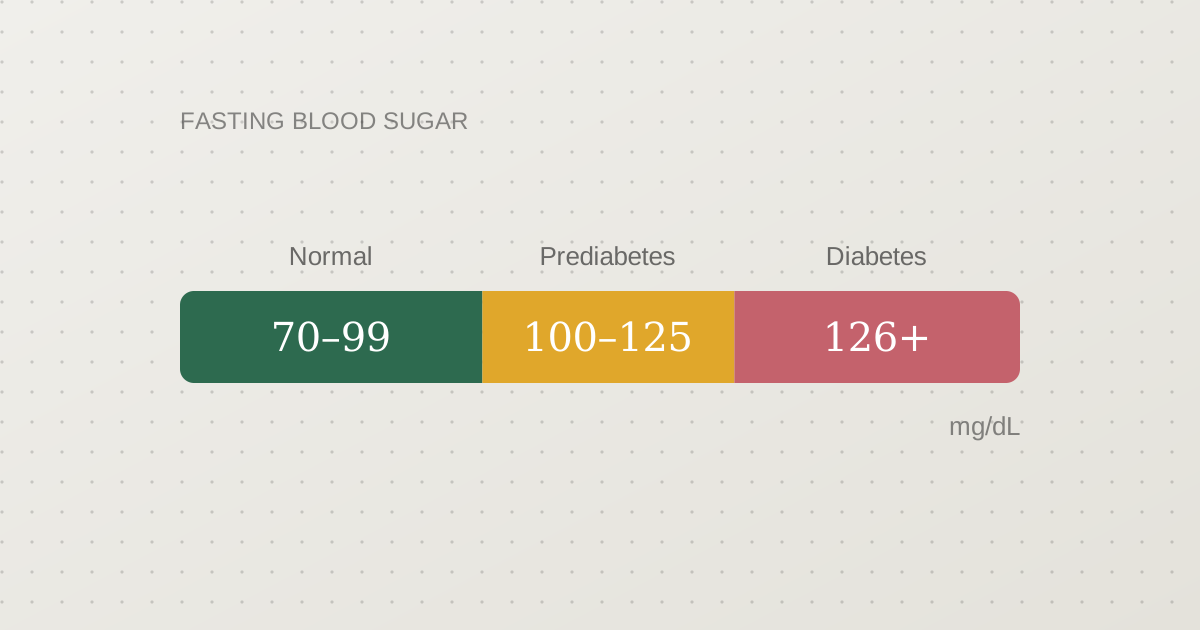
Normal Blood Sugar Levels Chart: Fasting, After Eating & A1c
One number rarely means much on its own. Here is what normal looks like fasting, two hours after eating and on an A1c test — and where the thresholds for prediabetes and diabetes actually sit.
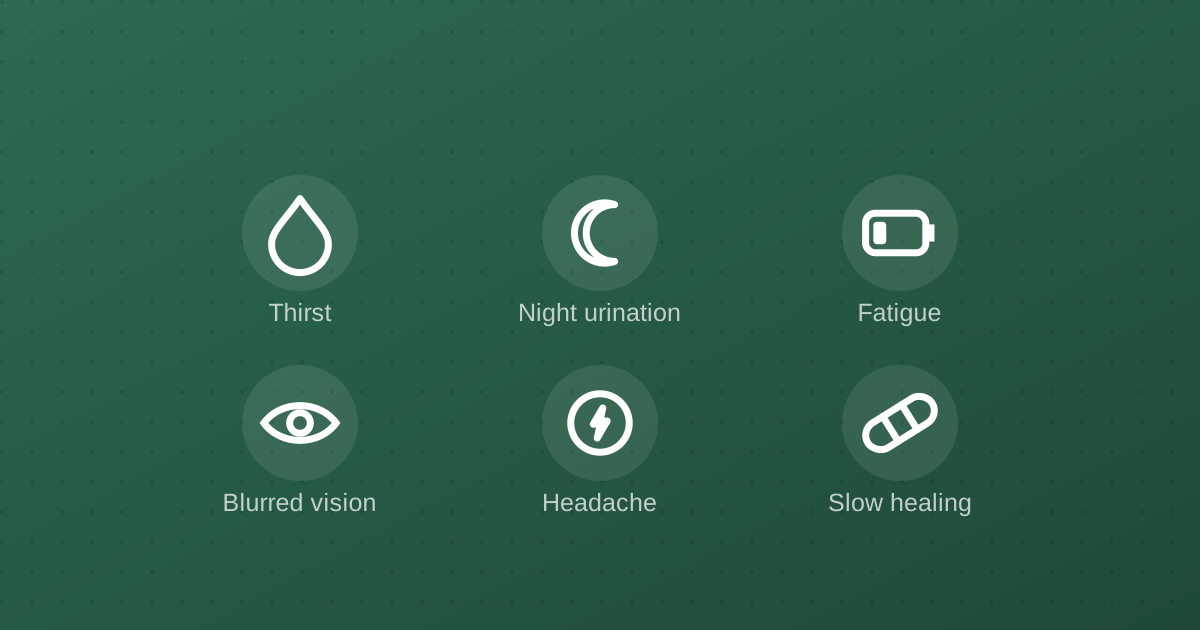
High Blood Sugar Symptoms: 12 Warning Signs You Shouldn't Ignore
Hyperglycemia rarely announces itself. It shows up as thirst you keep topping up, an afternoon that flattens you, and vision that blurs for a week. Here are the 12 signs worth knowing.
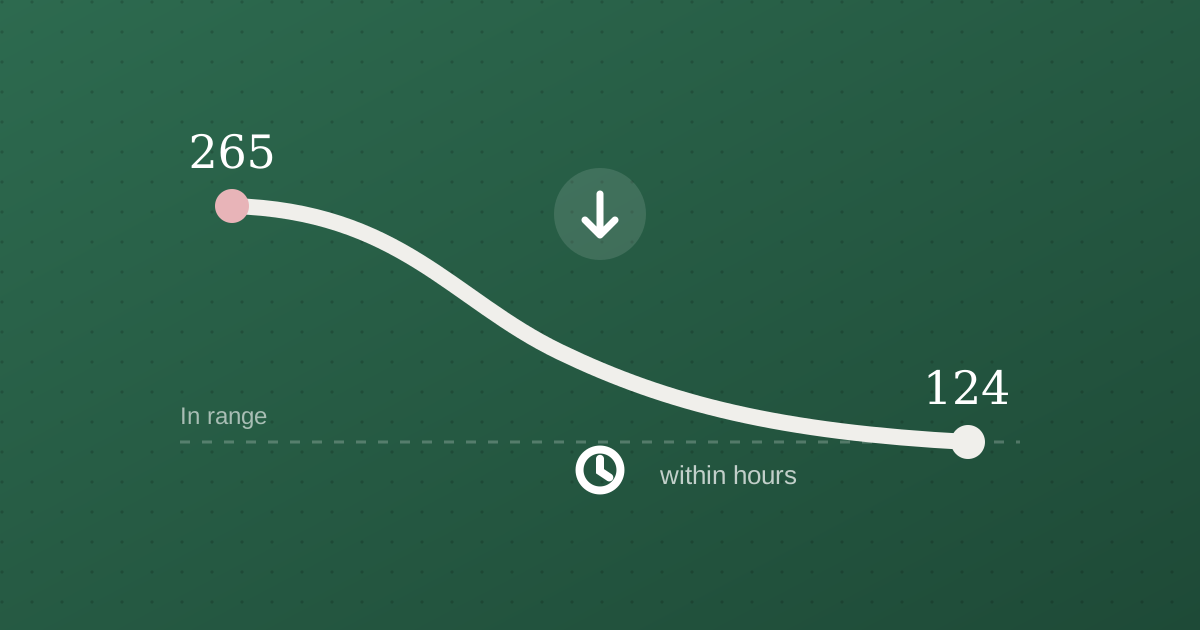
How to Lower Blood Sugar Quickly: 8 Evidence-Based Methods
Some things move glucose within the hour. Others take months but change the baseline. Here's what the evidence supports for each, and the point where self-management stops and medical help starts.