Normal Blood Sugar Levels by Age: What Actually Changes
Most by-age charts are misleading. The thresholds are identical for every adult; what legitimately loosens with age is the target you are given once diagnosed, and the reason is hypoglycemia risk.
Written from lived experience, not clinical training, and checked against the clinical guidance listed below. Not yet reviewed by a named clinician.
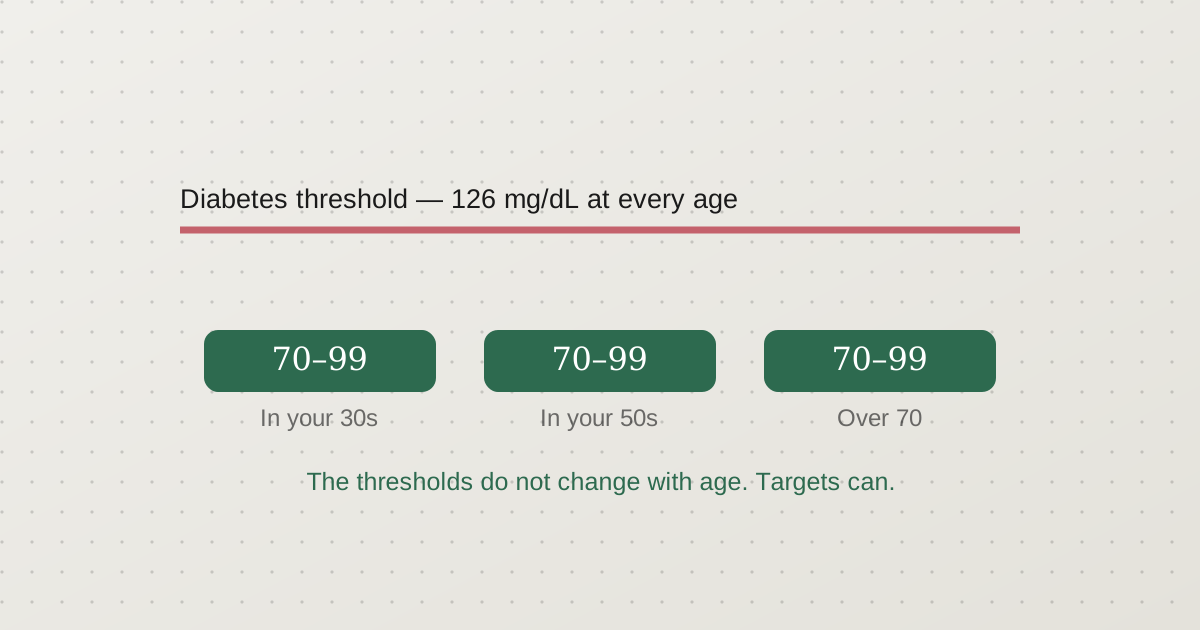
Search "normal blood sugar levels by age" and you will find charts giving different normal ranges for children, adults in their forties, and people over sixty. Most of them are wrong, or at least misleading in a way that matters.
Here is the honest version: the diagnostic thresholds do not change with age. A fasting glucose of 126 mg/dL means diabetes at 25 and it means diabetes at 75. What changes — legitimately, and for good reasons — is the target someone is given once they have a diagnosis.
This guide covers both, and why the distinction is worth understanding.
The thresholds, which are the same for every adult
| Test | Normal | Prediabetes | Diabetes |
|---|---|---|---|
| Fasting | 70–99 mg/dL 3.9–5.5 mmol/L |
100–125 mg/dL 5.6–6.9 mmol/L |
126 mg/dL or above 7.0 mmol/L or above |
| 2 hrs after eating | Below 140 mg/dL Below 7.8 mmol/L |
140–199 mg/dL 7.8–11.0 mmol/L |
200 mg/dL or above 11.1 mmol/L or above |
| A1c | Below 5.7% | 5.7–6.4% | 6.5% or above |
These apply to every non-pregnant adult, at 20 and at 80. Diagnosis normally requires two abnormal results — either two separate tests, or two different tests from the same blood draw.
The exceptions are pregnancy, which uses tighter thresholds and its own screening pathway, and children, where diagnostic criteria are the same but interpretation and type distribution differ enough that it is a paediatric conversation.
Why "by age" charts exist anyway
Two real things get muddled into one wrong claim.
Blood sugar does drift upward with age at a population level. Average fasting glucose in a group of 65-year-olds is higher than in a group of 25-year-olds. That is a description of what happens, not a redefinition of healthy — and it is largely driven by changes in muscle mass, activity, weight and medication use rather than by age itself. A 70-year-old who has kept muscle and stays active often has the glucose profile of someone decades younger.
Treatment targets genuinely do loosen with age, which is the legitimate kernel behind those charts. That is covered below.
Conflating the two produces charts implying that 110 mg/dL fasting is "normal for your age". It is not normal. It is common, and it is prediabetes.
Targets once you have a diabetes diagnosis
This is where age matters, and where the guidance is explicit about it.
| General adult | Older adult, healthy | Older adult, complex health | |
|---|---|---|---|
| A1c | Below 7% | Below 7.0–7.5% | Below 8.0–8.5% |
| Fasting / pre-meal | 80–130 mg/dL | 90–130 mg/dL | 100–180 mg/dL |
| Bedtime | 90–150 mg/dL | 90–150 mg/dL | 110–200 mg/dL |
The reasoning is not that older people deserve less careful care. It is that the balance of risk shifts.
The benefits of tight glucose control accrue over ten to twenty years — that is how long it takes for reduced small-vessel damage to translate into preserved vision and kidney function. The harms of hypoglycemia are immediate: falls, fractures, confusion, hospital admission, and in frail people, death.
For a 45-year-old with thirty years ahead, tight control is clearly worth it. For an 85-year-old with heart failure and a history of falls, pushing toward an A1c of 6.5% causes harm without delivering the benefit. A target of 8% is not neglect; it is the correct answer for that person.
Where age-specific thinking genuinely applies
Hypoglycemia risk rises with age, and the warning symptoms often blunt. Older adults are more likely to develop hypoglycemia unawareness, where the first sign is confusion rather than shakiness — which is easily mistaken for dementia or a urinary infection.
Kidney function declines, which changes how several glucose-lowering drugs are cleared. Metformin dosing depends on kidney function, and sulfonylureas accumulate.
Polypharmacy. More medications means more interactions, and several common ones raise glucose — steroids above all, plus thiazide diuretics and some antipsychotics.
A1c becomes less reliable. Anemia and chronic kidney disease both become more common with age, and both distort the result. Our A1c levels chart covers the situations where the number misleads.
Cognitive and functional capacity determines what a treatment plan can realistically ask of someone. A regimen requiring four injections and six finger-sticks is a poor fit for someone who cannot reliably manage it.
What about children and teenagers?
The diagnostic thresholds are the same. What differs is the context.
Type 1 diabetes is more common in this group and presents faster — symptoms escalating over days to weeks, often with weight loss, and with a real risk of ketoacidosis at diagnosis. Thirst, frequent urination, weight loss and fatigue in a child needs same-day assessment, not a routine appointment.
Type 2 diabetes in children and adolescents has become considerably more common and tends to be more aggressive than adult-onset disease. Screening is recommended from age 10 or the onset of puberty in children with overweight plus additional risk factors.
Targets in children are set by a paediatric team and balance control against growth, school life and hypoglycemia risk.
Glucose levels over 50: what actually changes
This is a common search, so it deserves a direct answer.
Nothing about what counts as normal. A fasting glucose of 95 mg/dL is normal at 55 exactly as it is at 25.
What does change is risk. Type 2 diabetes incidence rises steadily from midlife, driven by declining muscle mass, reduced activity, weight gain around the middle, and — in women — the metabolic shift through perimenopause and menopause.
The practical implications for anyone over 50:
- Get screened, at minimum every three years, more often with risk factors
- Protect muscle. Resistance training twice a week does more for glucose in this age group than almost any dietary change, because muscle is the body's largest glucose sink and it is what is being lost
- Take sleep apnea seriously. Prevalence rises with age and it is strongly associated with poor glucose control
- Review medications with a pharmacist or doctor if numbers change after a new prescription
What to do with a reading
Whatever your age, the interpretation is the same:
100–125 mg/dL fasting — prediabetes. Confirm with a lab test and an A1c. This is the stage where intervention works best, and 5 to 7% weight loss with regular activity cut progression by 58% in the Diabetes Prevention Program. See prediabetes symptoms.
126 mg/dL or above fasting — book an appointment. Not urgent, but it needs assessment rather than watching.
Above 240 mg/dL with ketones, or above 300 mg/dL — urgent. The full levels chart covers the thresholds that need same-day care.
Below 70 mg/dL — hypoglycemia. Treat with 15 grams of fast-acting carbohydrate and retest in 15 minutes. Below 54 mg/dL is a medical emergency at any age, and more dangerous the older you are.
If you already have a diagnosis and do not know your personal target, that is the single most useful question to take to your next appointment: what A1c are we aiming for, and why that number for me? The answer should reference your age, your other conditions and your hypoglycemia risk — and if it does not, it is worth asking why.
Frequently asked questions
What is a normal blood sugar level by age?
It does not vary by age. For every non-pregnant adult, normal is 70-99 mg/dL fasting, below 140 mg/dL two hours after eating, and an A1c below 5.7%. Charts that give different normal ranges for different decades are describing what is common, not what is healthy.
What is a normal fasting blood sugar for a 60 year old?
70 to 99 mg/dL, the same as for a 30 year old. If a 60 year old already has diabetes, the target is usually 80-130 mg/dL before meals, and may be set at 100-180 mg/dL if they have multiple other conditions or a history of hypoglycemia.
Do blood sugar levels naturally rise with age?
Average glucose does rise across a population with age, but that is driven by declining muscle mass, reduced activity and weight gain rather than by age itself. It describes a trend, not a healthy range — a fasting glucose of 110 mg/dL is prediabetes at any age.
Why are A1c targets higher for older adults?
Because the balance of risk shifts. The benefits of tight control take ten to twenty years to accrue, while the harms of hypoglycemia — falls, fractures, confusion, hospital admission — are immediate. For an older adult with other conditions, an A1c target of 8% is the correct answer rather than a compromise.
What blood sugar is dangerous for the elderly?
The same thresholds apply: above 240 mg/dL with ketones needs same-day advice and above 300 mg/dL is urgent. Older adults are at particular risk of hyperosmolar hyperglycemic state, which develops over days with profound dehydration. Low readings are also more dangerous — below 70 mg/dL needs treating promptly, and below 54 mg/dL is an emergency.
Sources
Diagnostic thresholds, target ranges and treatment guidance in this article are drawn from the following:
- Standards of Care in Diabetes — American Diabetes Association
- Older Adults and Diabetes — Centers for Disease Control and Prevention
- Classification of diabetes mellitus — World Health Organization
- National Diabetes Statistics Report — Centers for Disease Control and Prevention
Keep reading
Normal Blood Sugar Levels Chart: Fasting, After Eating & A1c
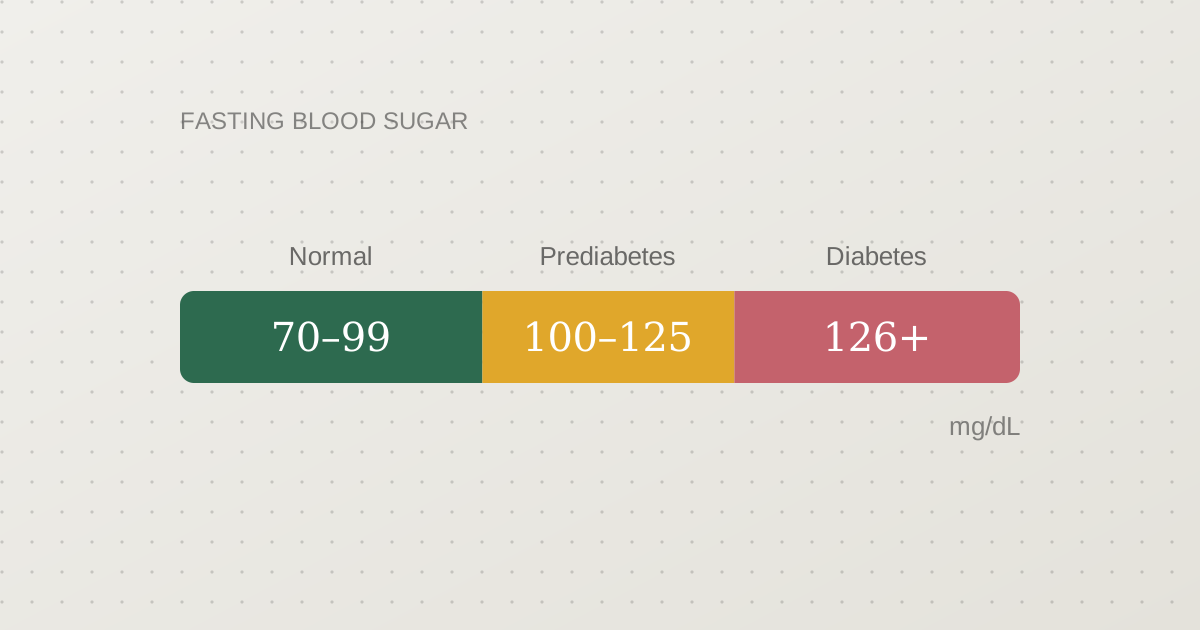
One number rarely means much on its own. Here is what normal looks like fasting, two hours after eating and on an A1c test — and where the thresholds for prediabetes and diabetes actually sit.
Fasting Blood Sugar Levels: Normal Range and What Yours Means
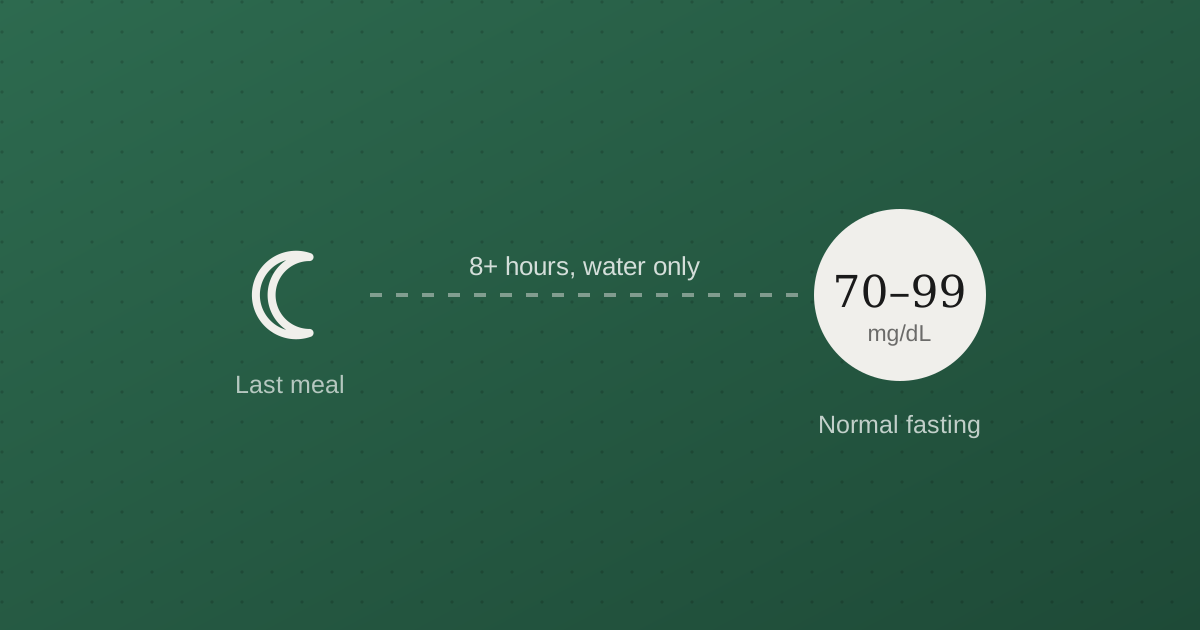
Normal is 70 to 99 mg/dL, prediabetes starts at 100 and diabetes at 126. But the number is only as good as the fast behind it — and morning readings mislead more often than any other measurement.
A1c Levels Chart: Normal Range and What Counts as a Good A1c
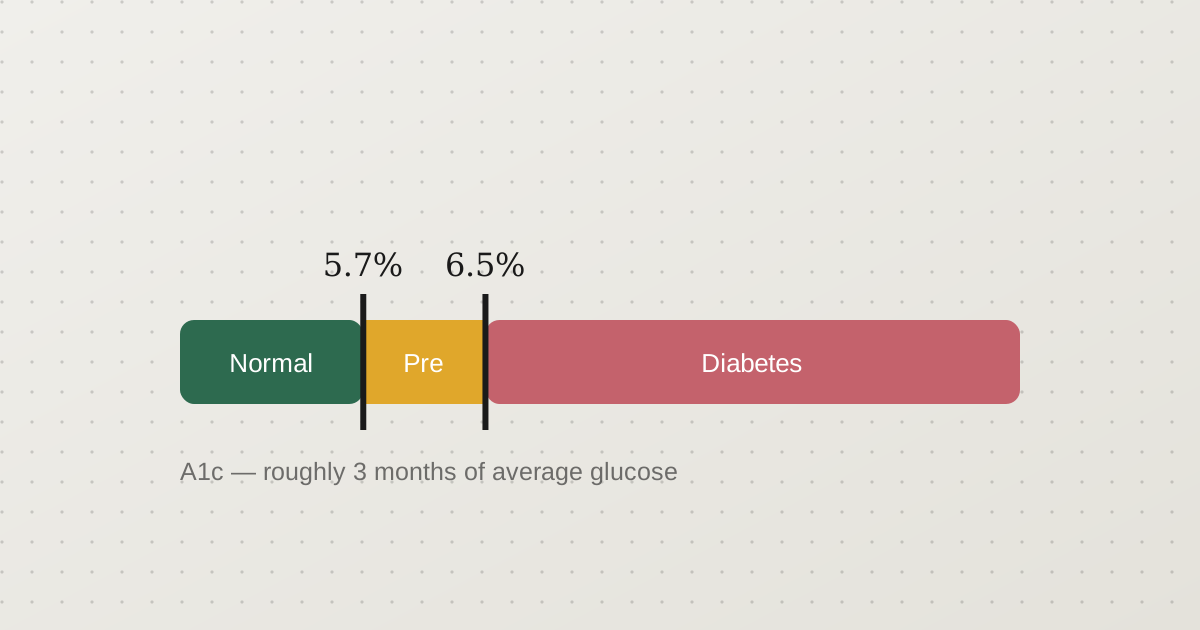
Below 5.7% is normal, 6.5% is the diabetes threshold, and under 7% is the usual target once you have a diagnosis. Here is the full chart, and the four situations where A1c misleads.