Fasting Blood Sugar Levels: Normal Range and What Yours Means
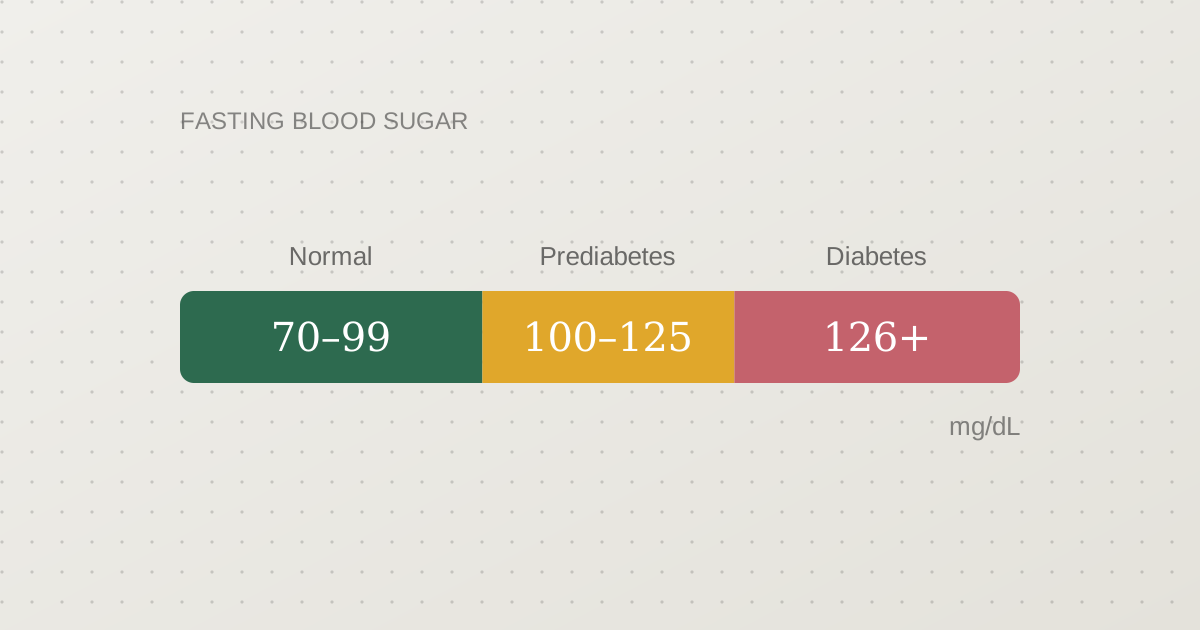
Normal is 70 to 99 mg/dL, prediabetes starts at 100 and diabetes at 126. But the number is only as good as the fast behind it — and morning readings mislead more often than any other measurement.
Written from lived experience, not clinical training, and checked against the clinical guidance listed below. Not yet reviewed by a named clinician.
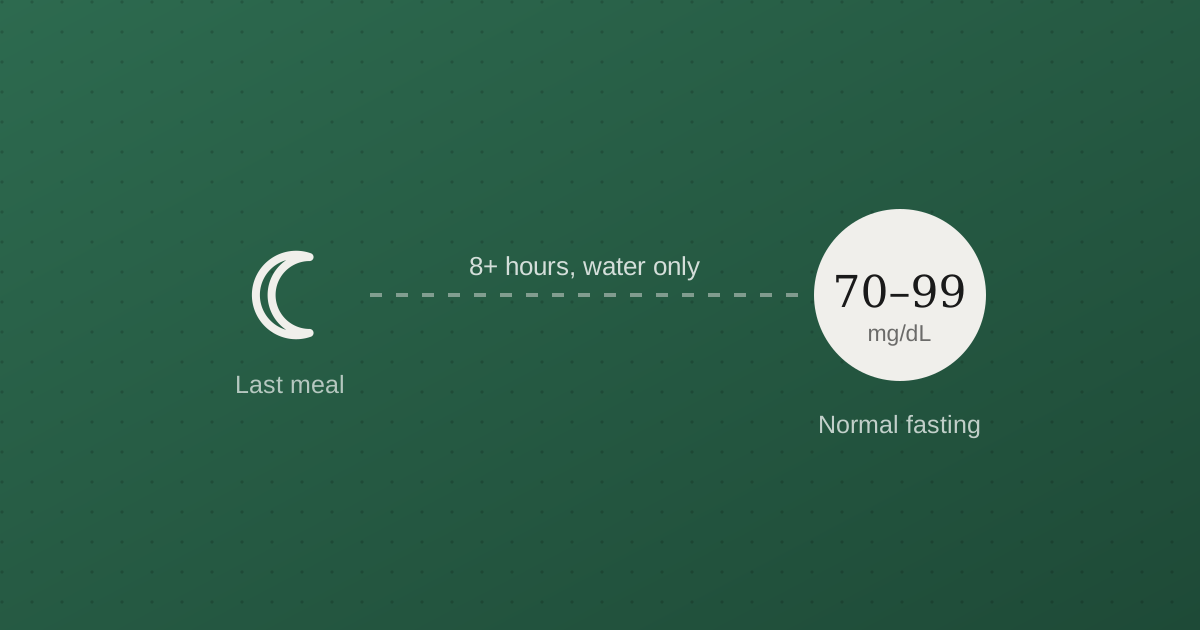
Fasting glucose is the most commonly ordered blood sugar test and the most commonly misread. The number itself is simple. What complicates it is that a fasting reading measures something people do not expect, and it is unusually easy to invalidate.
The ranges
| Fasting glucose | Category |
|---|---|
| Below 70 mg/dL (3.9 mmol/L) | Hypoglycemia |
| 70–99 mg/dL (3.9–5.5 mmol/L) | Normal |
| 100–125 mg/dL (5.6–6.9 mmol/L) | Prediabetes |
| 126 mg/dL (7.0 mmol/L) or above | Diabetes range |
Diagnosis normally needs two abnormal results — either two separate tests, or two different tests from the same blood draw.
These are the thresholds for non-pregnant adults. Pregnancy uses tighter targets, and people who already have diabetes are usually given a before-meals target of 80–130 mg/dL (4.4–7.2 mmol/L) rather than the diagnostic range.
What a fasting reading actually measures
Not what you ate yesterday. This is the part that surprises people.
Glucose enters your bloodstream from two sources: food, and glucose your liver releases from storage and manufactures from scratch. Overnight, with no food arriving, essentially all of it comes from the liver. Insulin's job is to tell the liver when to stop.
So fasting glucose is a measure of overnight liver output and how well insulin is restraining it. It reflects the baseline machinery, not last night's dinner — which is why people who eat carefully and still see a high morning number are not doing anything wrong.
What counts as a proper fast
At least eight hours with nothing but plain water. Things that quietly break it:
- Coffee or tea, including black — caffeine can raise glucose in some people
- Chewing gum and mints
- Toothpaste that gets swallowed
- A late-night snack inside the eight-hour window
- Alcohol the evening before, which can lower it
Twelve hours is not better than eight. Beyond about 14 hours the body starts compensating and readings can drift up, so an unusually long fast does not produce a cleaner number.
Why morning readings run high
The most common complaint about fasting glucose is that it is the highest reading of the day, which feels backwards.
The dawn phenomenon explains most of it. Between roughly 3am and 8am the body releases a coordinated pulse of cortisol, growth hormone, glucagon and adrenaline in preparation for waking, and the liver responds by releasing glucose. With enough insulin the rise is invisible. Without it, the reading climbs before you have eaten anything.
Two other patterns produce the same morning number and need opposite responses:
- Waning overnight insulin — glucose rises steadily from bedtime, suggesting the evening long-acting dose is not lasting
- Rebound after an overnight low — glucose drops in the small hours and the counter-regulatory response overshoots
Because the fixes are opposite, guessing is a poor strategy. A 3am reading for a few nights, or a spell with a continuous glucose monitor, distinguishes them.
Other things that raise a fasting number
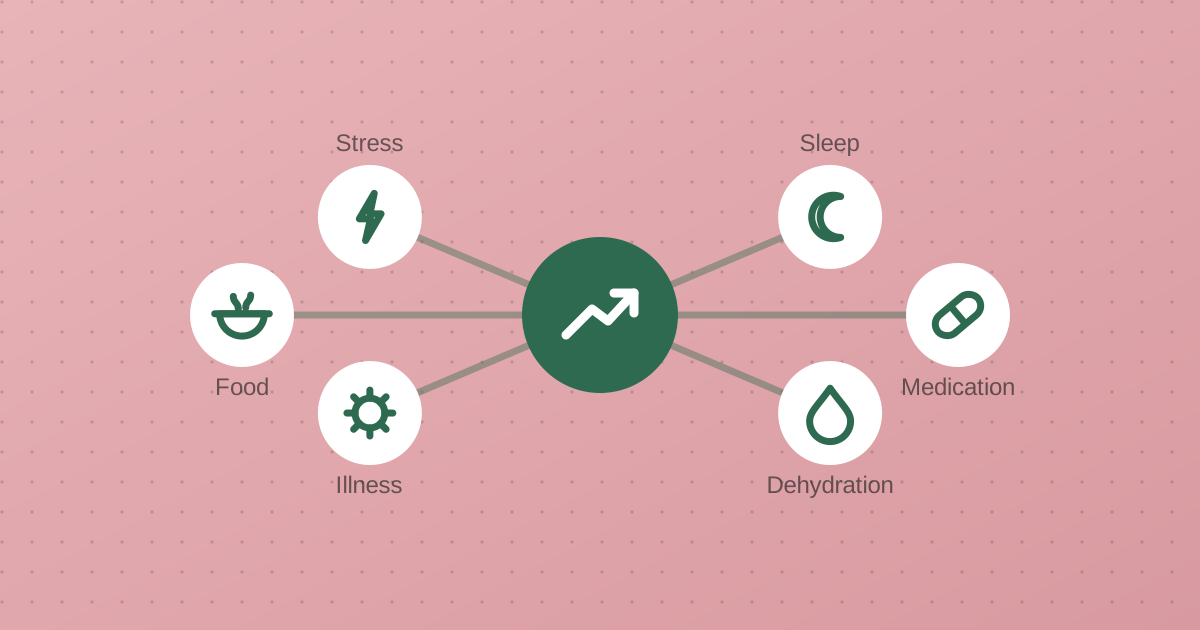
- Poor sleep. A single night restricted to four or five hours measurably reduces next-day insulin sensitivity.
- Untreated sleep apnea. Strongly associated with stubborn fasting readings, and badly underdiagnosed. Loud snoring plus waking unrefreshed plus a fasting number that will not move is a pattern worth investigating.
- Stress. Cortisol raises glucose directly, on top of the dawn surge.
- A large or late evening meal, particularly one high in fat, which extends the glucose tail well past bedtime.
- Steroids and several other medications — see what causes high blood sugar.
- Illness or infection, often dramatically.
- Dehydration, which concentrates the blood.
Getting a reading you can trust
Home meters are permitted a margin of roughly ±15% against a laboratory value. A true 100 mg/dL can legitimately read anywhere from 85 to 115. That is worth remembering before drawing conclusions from a single number near a threshold.
To get the best out of one:
- Wash and dry your hands. Fruit residue or hand cream on a fingertip can inflate a reading dramatically. Alcohol wipes can dilute the sample.
- Do not squeeze the finger hard — that mixes in tissue fluid.
- Check strips are in date and have not been stored somewhere hot, humid or in direct sun.
- Use the side of the fingertip, not the pad, and rotate fingers.
- Test at a consistent time, so you are comparing like with like.
If a reading looks wrong, wash your hands and repeat before acting on it.
What fasting glucose misses
An isolated fasting test misses a meaningful share of early glucose problems, because post-meal numbers usually deteriorate first.
The first phase of insulin release — the quick burst that meets a meal — is lost early, while overnight control still works. Someone can hold a perfectly respectable fasting glucose of 92 mg/dL and still be spiking to 190 after lunch.
The practical consequence: if you have symptoms and a normal fasting result, ask for an A1c or a two-hour value before concluding nothing is wrong. One normal test does not close the question.
The reverse also happens. Some people have raised fasting glucose with normal post-meal handling — impaired fasting glucose without impaired glucose tolerance. They are different physiological problems that happen to share a category name.
Fasting glucose versus A1c
They answer different questions, which is why guidelines allow either and why running both is often more informative than choosing.
Fasting glucose is a single moment. Cheap, widely available, sensitive to how well you fasted and how you slept.
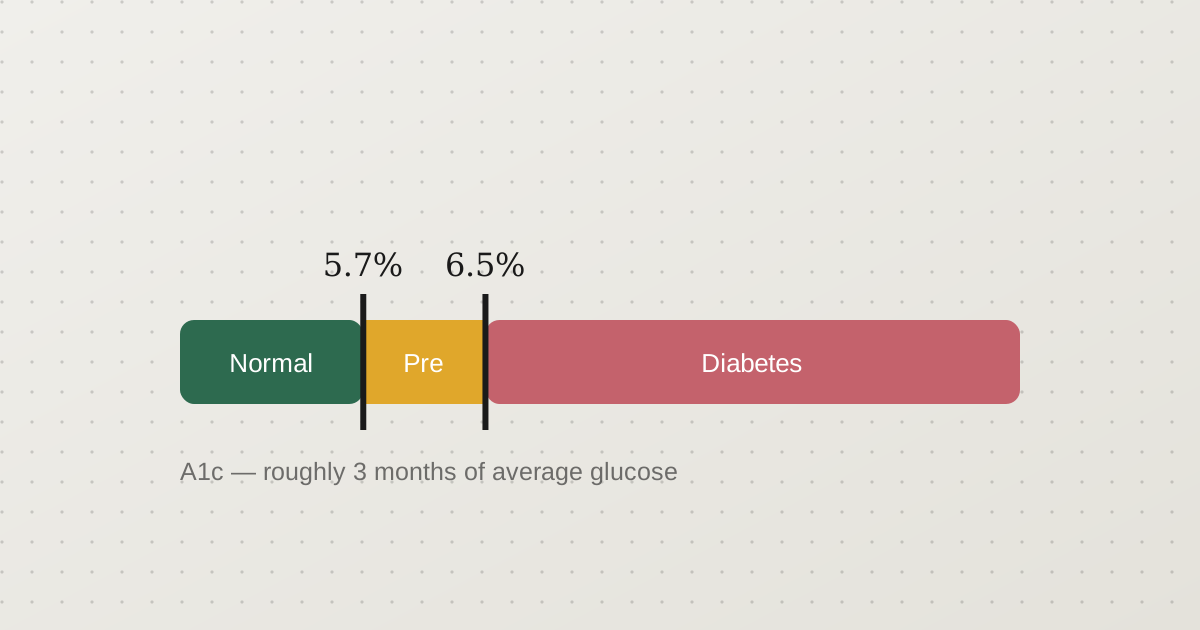
A1c is a three-month average. No fasting required, unaffected by one bad morning, but unreliable in anemia, kidney disease, pregnancy and several hemoglobin variants — and it cannot show variability at all.
When the two disagree, that is information rather than an error. Our A1c levels chart covers the situations where the average misleads.
Does the normal range change with age?
This comes up constantly, and the honest answer is that the diagnostic thresholds do not. There is no separate fasting glucose chart for people in their sixties — 126 mg/dL means the same thing at 70 as at 30.
What does change is the target once someone has a diagnosis. Older adults, particularly those with multiple conditions, limited life expectancy or a history of falls, are often given deliberately looser targets, because for them hypoglycemia is the greater danger. An A1c goal of 8% and a before-meals range of 90–150 mg/dL is a reasonable, guideline-supported target for some people, not a failure of control.
It is also true that fasting glucose drifts upward with age at a population level. That is a description of what happens, not a redefinition of normal — and it is largely driven by changes in activity, muscle mass and weight rather than by age itself.
Fasting glucose in pregnancy
Pregnancy uses tighter thresholds and its own testing pathway, so the numbers above do not apply.
Gestational diabetes is usually screened for between 24 and 28 weeks, and targets during pregnancy are considerably stricter than outside it — typically a fasting value below 95 mg/dL (5.3 mmol/L). Anyone pregnant should work from their maternity team's numbers rather than the general adult ranges.
Worth knowing afterwards: gestational diabetes usually resolves after delivery but is one of the strongest predictors of later type 2 diabetes. Testing 4 to 12 weeks postpartum and then every one to three years for life is recommended, and it is frequently the follow-up that gets missed.
When to act on a result
100–125 mg/dL: confirm with a lab test and an A1c. This is prediabetes, it is frequently reversible, and it is the stage where intervention works best — see prediabetes symptoms for what to do next.
126 mg/dL or above: book an appointment. Not an emergency, but it needs proper assessment rather than watchful waiting.
Above 240 mg/dL with ketones, or above 300 mg/dL: urgent, and the full levels chart covers the thresholds that need same-day care.
Below 70 mg/dL: treat with 15 grams of fast-acting carbohydrate and retest in 15 minutes. Below 54 mg/dL is a medical emergency regardless of how well you feel.
Frequently asked questions
What is a normal fasting blood sugar level?
70 to 99 mg/dL (3.9 to 5.5 mmol/L) for an adult without diabetes, measured after at least eight hours with nothing but water. 100 to 125 mg/dL is prediabetes and 126 mg/dL or above on two separate tests indicates diabetes.
How many hours do you need to fast?
At least eight hours with nothing but plain water. Black coffee, tea, chewing gum, mints and toothpaste that gets swallowed can all affect the result. Most people fast overnight and test first thing in the morning.
Why is my fasting blood sugar higher than after meals?
Usually the dawn phenomenon. Between roughly 3am and 8am the body releases cortisol, growth hormone and glucagon to prepare for waking, and the liver responds by releasing glucose. If insulin is insufficient, the morning reading climbs before you have eaten anything.
What fasting blood sugar is dangerous?
Fasting readings above 126 mg/dL need medical assessment, though not urgently. Above 240 mg/dL with ketones needs same-day advice, above 300 mg/dL is urgent, and above 400 mg/dL usually needs emergency care. On the low side, below 70 mg/dL is hypoglycemia and below 54 mg/dL is an emergency.
Can one high fasting reading mean diabetes?
No. Diagnosis normally requires two abnormal results, either two separate tests or two different tests from the same draw. Home meters are also permitted a margin of roughly 15% against a laboratory value, so a single borderline home reading is a reason to get a lab test rather than a diagnosis.
Common questions on this topic
Each of these is answered on its own page, in the first two sentences.
Sources
Diagnostic thresholds, target ranges and treatment guidance in this article are drawn from the following:
- Standards of Care in Diabetes — American Diabetes Association
- Classification of diabetes mellitus — World Health Organization
- The A1C Test & Diabetes — National Institute of Diabetes and Digestive and Kidney Diseases
- National Diabetes Statistics Report — Centers for Disease Control and Prevention
Keep reading
Normal Blood Sugar Levels Chart: Fasting, After Eating & A1c
One number rarely means much on its own. Here is what normal looks like fasting, two hours after eating and on an A1c test — and where the thresholds for prediabetes and diabetes actually sit.
A1c Levels Chart: Normal Range and What Counts as a Good A1c
Below 5.7% is normal, 6.5% is the diabetes threshold, and under 7% is the usual target once you have a diagnosis. Here is the full chart, and the four situations where A1c misleads.
What Causes High Blood Sugar? 10 Common Triggers Explained
Food is the obvious answer and often the wrong one. Stress, a short night, a chest infection, a steroid injection and your own liver at 4am all raise glucose too.