What Causes High Blood Sugar? 10 Common Triggers Explained
Food is the obvious answer and often the wrong one. Stress, a short night, a chest infection, a steroid injection and your own liver at 4am all raise glucose too.
Written by our editorial team and checked against the clinical guidance listed below. Not yet reviewed by a named clinician.
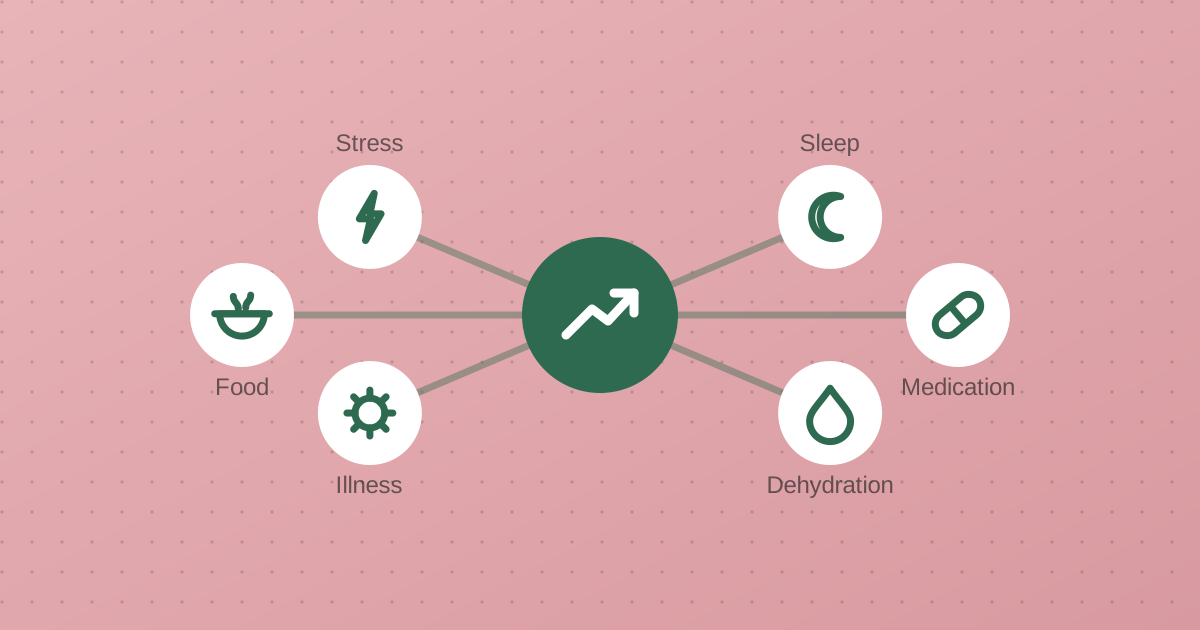
The intuitive model of blood sugar is a simple one: sugar in, sugar up. It is not wrong, but it explains perhaps half of what people actually see on their meters. Plenty of high readings arrive on days of careful eating, and the reason is usually one of the ten triggers below.
How glucose is normally regulated
Blood sugar stays in range because insulin moves glucose out of the bloodstream into cells and simultaneously tells the liver to stop releasing more. High blood sugar follows when that system fails at one of three points, and knowing which point makes the triggers below much easier to place.
Glucose enters your bloodstream from two sources: food you have eaten, and glucose your liver releases from storage. Insulin, made by the beta cells of the pancreas, acts as the key that lets glucose into muscle and fat cells, and simultaneously tells the liver to stop releasing more. Glucagon does the opposite when levels fall too low.
High blood sugar happens when that system fails at one of three points: not enough insulin (type 1 diabetes, advanced type 2, pancreatic damage), cells not responding to insulin (insulin resistance), or too much glucose arriving at once for the available insulin to handle. Most of the triggers below act through one of those routes.
1. Carbohydrate quantity, quality and timing
Carbohydrate is the macronutrient with the largest and fastest effect, but the details matter more than the total.
Form matters more than grams. Whole oats and instant oat cereal contain similar carbohydrate; they produce very different curves. Liquid sugar is the extreme case — fruit juice hits the bloodstream almost as fast as glucose syrup, because there is no fiber or structure to slow it.
What it is eaten with changes everything. Carbohydrate alone spikes; the same carbohydrate with protein, fat or vegetables spikes much less.
Order within the meal matters. Eating vegetables and protein before starch consistently lowers the post-meal peak.
Portions creep. Restaurant and packaged portions have grown steadily, and a "bowl of rice" can plausibly mean 40 grams of carbohydrate or 110.
2. Insufficient or mistimed medication
For anyone on treatment, the most common cause of an unexplained high is a medication issue rather than a dietary one:
- A missed or forgotten dose
- Insulin that has expired, been frozen, or left in a hot car — heat degrades it and it may look completely normal
- Injecting into a lipohypertrophic site (a lumpy area from repeated use), which gives erratic absorption
- Miscounted carbohydrates and therefore an under-dose
- A pump site or infusion set that has failed, kinked or come loose
- Progression of type 2 diabetes, where a dose that worked last year genuinely is not enough now
That last one deserves emphasis: needing more medication over time is the natural history of type 2 diabetes, not evidence of failure.
3. The dawn phenomenon — why blood sugar is high in the morning
Blood sugar is high in the morning, before you have eaten anything, most often because of the dawn phenomenon. Between roughly 3am and 8am, the body releases a coordinated pulse of cortisol, growth hormone, glucagon and adrenaline to prepare for waking. The liver responds by releasing glucose — a sensible arrangement if you are about to get up and move. In someone with enough insulin, the rise is invisible. In someone without, fasting glucose climbs before they have eaten anything at all.
This is the usual answer to "why is my blood sugar high in the morning". The classic distinguishing tests are a reading at around 3am, or a few nights of continuous monitoring:
- Dawn phenomenon: glucose is normal at 3am, then rises steadily toward waking.
- Somogyi effect (rebound): glucose is low at 3am, and the counter-regulatory response overshoots. This is much less common than it was once thought to be.
- Waning insulin: glucose rises from bedtime onward, suggesting the evening long-acting dose is not lasting.
The three have opposite fixes, which is why guessing is a poor strategy — a rebound treated as a dawn phenomenon means more insulin at exactly the wrong time.
4. Can stress cause high blood sugar?
Stress does cause high blood sugar, and the effect is large enough to see on a continuous glucose monitor within minutes of a difficult phone call. Cortisol and adrenaline raise glucose deliberately: the body is fueling a response to threat. The liver dumps stored glucose and cells become temporarily less insulin-sensitive.
Your body does not distinguish between categories of stress. A hostile meeting, a bereavement, a marathon, surgery, a broken bone and a bad chest infection all produce a version of the same hormonal response. Chronic low-grade stress keeps cortisol persistently elevated and is associated with measurably worse control.
5. Illness and infection
Any acute illness raises glucose, and the effect is often dramatic — a routine urinary tract infection can push a normally well-controlled person into the 300s. Two things happen at once: inflammatory cytokines induce temporary insulin resistance, and the stress response releases stored glucose.
This is why sick day rules exist. Broadly, and subject to your own care team's version: keep taking your insulin even if you are eating little, check glucose more often, check ketones if you are above 240 mg/dL, keep fluids up, and know the threshold at which you call for help. Illness is the most common precipitant of diabetic ketoacidosis.
6. Medications you might not suspect
Several widely used drugs raise blood glucose:
- Corticosteroids — prednisone, dexamethasone, and injected steroids for joints or the spine. The effect is large, can last days to weeks after a single injection, and is often the single biggest surprise among these causes.
- Thiazide diuretics and some beta blockers
- Certain atypical antipsychotics, notably olanzapine and clozapine
- Statins, which produce a small increase in diabetes risk that is generally outweighed by cardiovascular benefit
- Immunosuppressants such as tacrolimus and ciclosporin
- Decongestants containing pseudoephedrine, and some cough syrups with sugar
- Niacin at high doses
If your numbers changed shortly after a new prescription, that timing is worth mentioning rather than dismissing.
7. Poor sleep
Short sleep, fragmented sleep and shift work all reduce insulin sensitivity, and the effect appears fast — experimental studies show measurable impairment after a single night restricted to four hours.
Obstructive sleep apnoea deserves separate mention. It is strongly associated with insulin resistance and poor glucose control, common in people carrying extra weight, and substantially underdiagnosed. Loud snoring, witnessed pauses in breathing, morning headaches and waking unrefreshed alongside stubborn fasting numbers is a pattern that should prompt a referral.
8. Dehydration
Less water in the bloodstream means the same glucose is more concentrated, and poorer kidney perfusion means less of it is cleared into urine. It is also a feedback loop: high glucose causes urinary fluid loss, which causes dehydration, which raises glucose further. In older adults this loop is the mechanism behind hyperosmolar hyperglycemic state.
9. Hormonal changes
The menstrual cycle shifts insulin sensitivity, and many women see higher readings in the luteal phase — the week or so before a period — as progesterone rises.
Perimenopause and menopause bring falling oestrogen, changing body composition and disrupted sleep, all of which push in the same direction.
Pregnancy produces substantial insulin resistance by design, driven by placental hormones. Gestational diabetes is common and specifically screened for.
Polycystic ovary syndrome involves insulin resistance in most cases, independent of weight.
Our comparison of symptoms in women and men goes into the hormonal picture in more detail.
10. High blood sugar causes without diabetes
You can have persistently high blood sugar without having diabetes. Beyond the steroids, illness and stress already covered, the conditions worth ruling out are:
- Cushing's syndrome — chronic cortisol excess
- Acromegaly — growth hormone excess
- Hyperthyroidism
- Chronic pancreatitis, pancreatic cancer or pancreatic surgery, which reduce insulin-producing capacity
- Haemochromatosis — iron overload damaging the pancreas
- Stress hyperglycemia during critical illness, common and usually transient, but a marker of higher future risk
Working out which one applies to you
The timing of your high readings usually identifies the cause: highs confined to the morning point to the dawn phenomenon or waning overnight insulin, highs after specific meals point to carbohydrate load, and highs across several days point to illness or a new medication. Rarely does one cause explain everything.
High in the morning, normal the rest of the day → dawn phenomenon, waning overnight insulin, or a large late meal.
High after specific meals → carbohydrate quantity, quality or order in those meals.
High all day, suddenly, for several days → illness, infection, a new medication, or insulin that has gone bad.
High and gradually creeping up over months → progression of insulin resistance, weight gain, reduced activity, or a treatment that needs adjusting.
High and erratic with no pattern at all → often technique or timing: injection sites, missed doses, inconsistent test timing.
This is precisely the kind of question a log answers and memory does not. Record the reading, the time, and one short note about context — meal, sleep, stress, illness, exercise. Two weeks of that will usually make the pattern obvious, and it turns a vague "my sugars have been bad" into something your clinician can act on.
Once you know the cause, the evidence-based ways to bring readings down become much easier to target — and if the highs come with warning signs such as vomiting, confusion or fruity-smelling breath, treat that as urgent rather than a puzzle to solve at home.
Frequently asked questions
Why is my blood sugar high in the morning when I have not eaten?
Most often the dawn phenomenon: between roughly 3am and 8am your body releases cortisol, growth hormone and glucagon to prepare you for waking, and the liver responds by releasing glucose. If insulin is insufficient, that glucose has nowhere to go and fasting readings rise. Less commonly it is the Somogyi effect — a rebound after an overnight low — or simply waning insulin from the previous evening's dose.
Can stress cause high blood sugar?
Yes. Cortisol and adrenaline raise blood glucose by prompting the liver to release stored glucose and by making cells temporarily less responsive to insulin. This happens with emotional stress, physical stress such as surgery or infection, and poor sleep. Continuous glucose monitor traces often show a rise within minutes of an acutely stressful event.
Can you have high blood sugar without diabetes?
Yes. Steroid medications, acute illness, infection, surgery, pancreatitis, Cushing's syndrome and certain antipsychotics and diuretics all raise glucose in people without diabetes. Stress hyperglycemia during hospital admission is common, usually resolves, and marks a person as being at higher future risk of diabetes.
Does dehydration raise blood sugar?
It raises the measured concentration, yes. With less water in the bloodstream the same amount of glucose is more concentrated, and reduced kidney perfusion means less glucose is cleared in urine. It is also self-reinforcing, since high glucose itself causes fluid loss.
Why is my blood sugar high when I have not eaten anything unusual?
Because food is only one input. Illness, poor sleep, stress, a new medication, a missed or expired insulin dose, hormonal changes around menstruation or menopause, and simple insulin resistance progression all move glucose independently of what you ate. This is exactly the pattern a log is designed to untangle.
Sources
Diagnostic thresholds, target ranges and treatment guidance in this article are drawn from the following:
- Standards of Care in Diabetes — American Diabetes Association
- High blood sugar (hyperglycaemia) — NHS
- Diabetic Ketoacidosis (DKA) — Centers for Disease Control and Prevention
- National Diabetes Statistics Report — Centers for Disease Control and Prevention
Keep reading
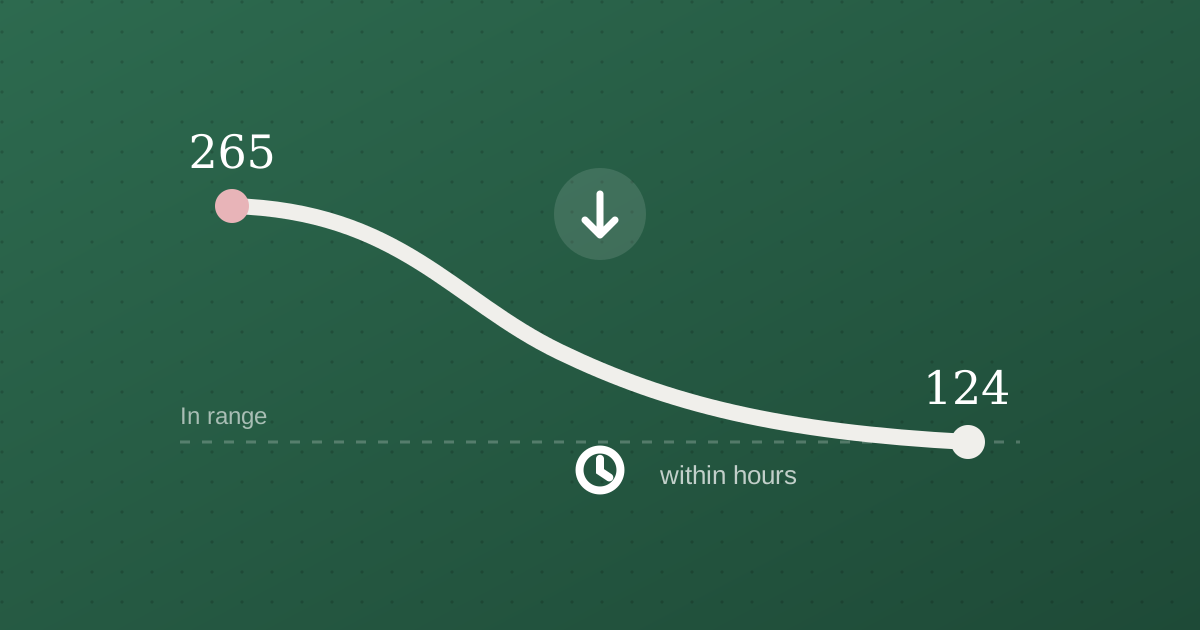
How to Lower Blood Sugar Quickly: 8 Evidence-Based Methods
Some things move glucose within the hour. Others take months but change the baseline. Here's what the evidence supports for each, and the point where self-management stops and medical help starts.
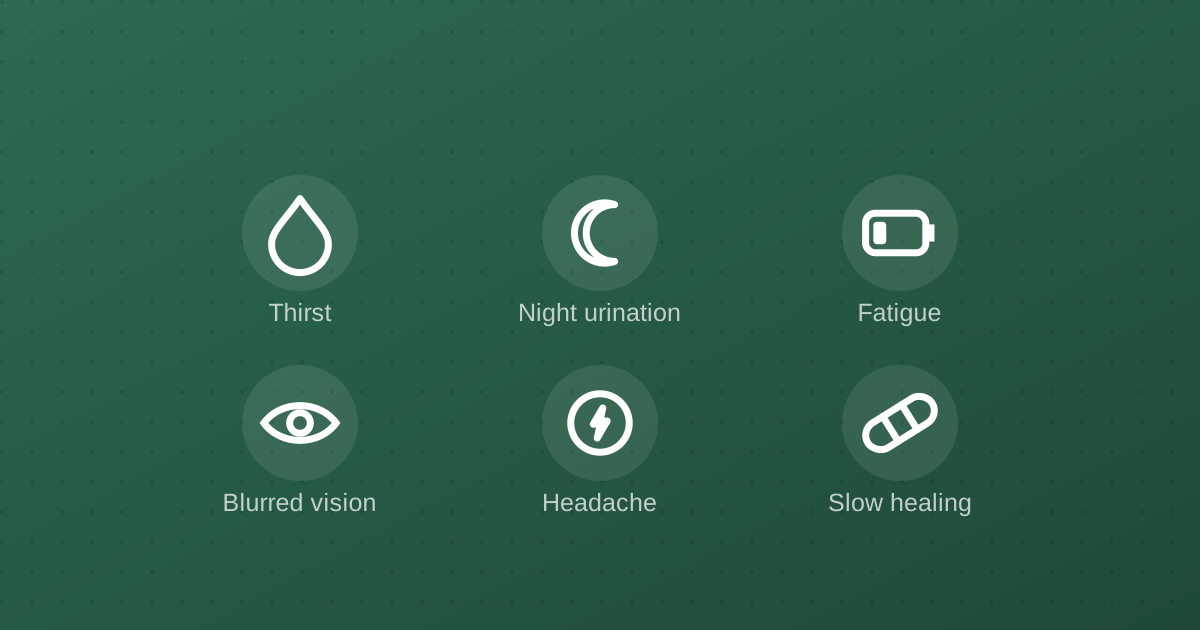
High Blood Sugar Symptoms: 12 Warning Signs You Shouldn't Ignore
Hyperglycemia rarely announces itself. It shows up as thirst you keep topping up, an afternoon that flattens you, and vision that blurs for a week. Here are the 12 signs worth knowing.
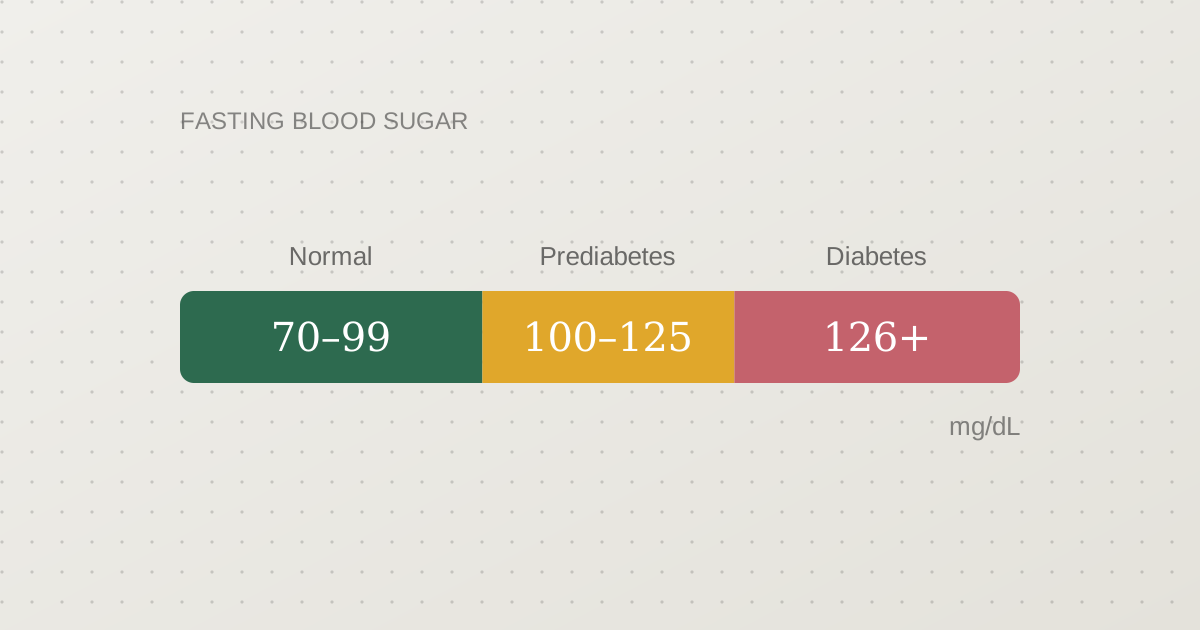
Normal Blood Sugar Levels Chart: Fasting, After Eating & A1c
One number rarely means much on its own. Here is what normal looks like fasting, two hours after eating and on an A1c test — and where the thresholds for prediabetes and diabetes actually sit.