Normal Blood Sugar Levels Chart: Fasting, After Eating & A1c
One number rarely means much on its own. Here is what normal looks like fasting, two hours after eating and on an A1c test — and where the thresholds for prediabetes and diabetes actually sit.
Written by our editorial team and checked against the clinical guidance listed below. Not yet reviewed by a named clinician.
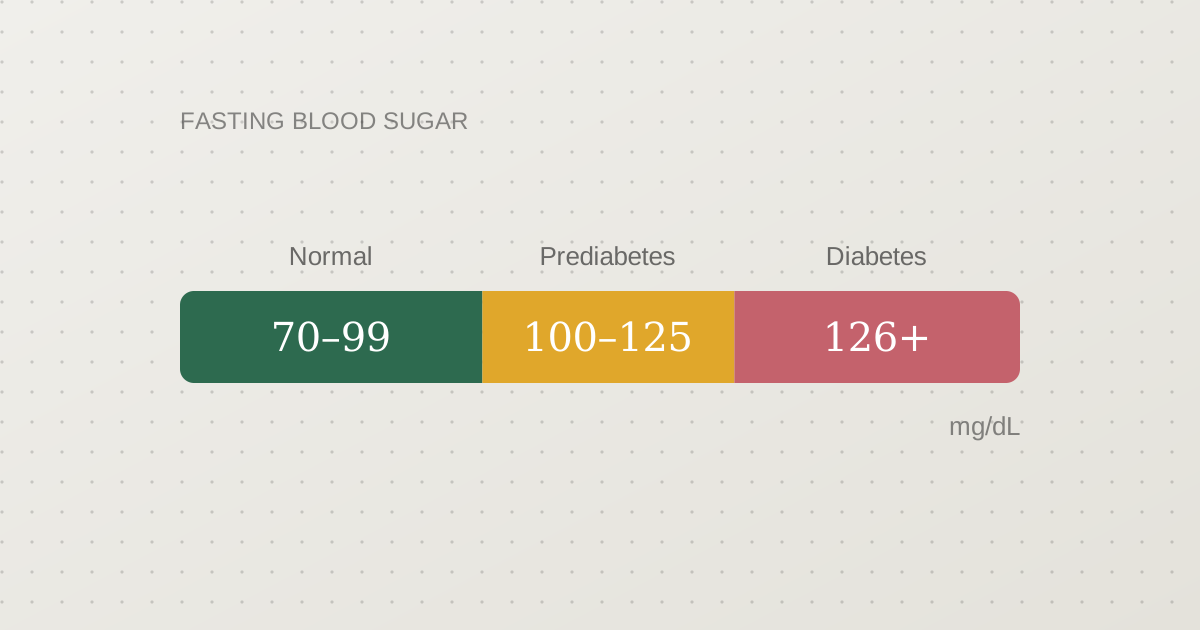
Blood sugar numbers are only useful once you know what to compare them against — and the comparison changes depending on when the reading was taken, whether you have a diabetes diagnosis, and which test produced it. This page collects the standard ranges in one place, in both mg/dL and mmol/L, along with the context that makes them meaningful.
A note before the tables: these are diagnostic thresholds for non-pregnant adults. Pregnancy uses tighter targets, children and older adults are often managed differently, and anemia, kidney disease and some hemoglobin variants can make an A1c misleading. Your own targets are a conversation with your clinician, not a lookup.
Normal blood sugar levels chart
A normal fasting blood sugar is 70–99 mg/dL (3.9–5.5 mmol/L), a normal reading two hours after eating is below 140 mg/dL (7.8 mmol/L), and a normal A1c is below 5.7%. The full chart below sets those alongside the prediabetes and diabetes ranges for each test.
| Test | Normal | Prediabetes | Diabetes |
|---|---|---|---|
| Fasting (8+ hrs, no food) | 70–99 mg/dL 3.9–5.5 mmol/L |
100–125 mg/dL 5.6–6.9 mmol/L |
126 mg/dL or above 7.0 mmol/L or above |
| 2 hours after eating | Below 140 mg/dL Below 7.8 mmol/L |
140–199 mg/dL 7.8–11.0 mmol/L |
200 mg/dL or above 11.1 mmol/L or above |
| A1c (3-month average) | Below 5.7% | 5.7–6.4% | 6.5% or above |
| Random / casual | Below 140 mg/dL | 140–199 mg/dL | 200 mg/dL or above with symptoms |
Diagnosis normally requires two abnormal results — either two separate tests, or two different tests from the same blood draw. The exception is a random glucose of 200 mg/dL or above in someone with classic symptoms, which is diagnostic on its own.
What is a normal fasting blood sugar?
A normal fasting blood sugar is 70–99 mg/dL (3.9–5.5 mmol/L). Fasting glucose is measured after at least eight hours without food or drink other than water, which in practice means first thing in the morning. It reflects how much glucose your liver is releasing overnight and how effectively insulin is holding that release in check.
The gap between 99 and 100 mg/dL is a line drawn on a continuum rather than a cliff edge. Someone at 104 mg/dL is not meaningfully different from someone at 98 — but they are on a trajectory that deserves attention, because impaired fasting glucose is one of the strongest predictors of future type 2 diabetes.
If your fasting number is consistently higher than your bedtime number, look at the dawn phenomenon and other overnight causes rather than assuming you ate something wrong at dinner.
What should blood sugar be after eating?
Blood sugar two hours after eating should be below 140 mg/dL (7.8 mmol/L) in someone without diabetes, and below 180 mg/dL (10.0 mmol/L) for most people who have diabetes. Glucose peaks roughly 60 to 90 minutes after the start of a meal and should be heading back down by the two-hour mark. That two-hour mark is the standard measurement point, and it is also where the oral glucose tolerance test takes its reading.
Post-meal numbers usually deteriorate before fasting numbers do. Someone can hold a perfectly respectable fasting glucose of 92 mg/dL while spiking to 190 after lunch — the first phase of insulin release has been lost, but overnight control is still intact. This is precisely why an isolated fasting test can miss early glucose intolerance, and why a two-hour value is worth asking for if you have symptoms and a normal fasting result.
What does your A1c percentage mean?
An A1c below 5.7% is normal, 5.7–6.4% indicates prediabetes, and 6.5% or above indicates diabetes. A1c measures the proportion of your hemoglobin that has glucose attached to it. Because red blood cells live about three months, it acts as a rolling average — no fasting required, and no single bad morning can distort it.
| A1c | Estimated average glucose | Category |
|---|---|---|
| 5.0% | 97 mg/dL (5.4 mmol/L) | Normal |
| 5.5% | 111 mg/dL (6.2 mmol/L) | Normal |
| 5.7% | 117 mg/dL (6.5 mmol/L) | Prediabetes begins |
| 6.0% | 126 mg/dL (7.0 mmol/L) | Prediabetes |
| 6.5% | 140 mg/dL (7.8 mmol/L) | Diabetes threshold |
| 7.0% | 154 mg/dL (8.6 mmol/L) | Common adult target |
| 8.0% | 183 mg/dL (10.2 mmol/L) | Above target |
| 9.0% | 212 mg/dL (11.8 mmol/L) | Well above target |
| 10.0% | 240 mg/dL (13.4 mmol/L) | High risk of complications |
| 12.0% | 298 mg/dL (16.5 mmol/L) | Very high risk |
Those averages come from the standard conversion, eAG = (28.7 × A1c) − 46.7. The full interactive version, including target ranges for people who already have a diagnosis, is on our blood sugar chart page.
A1c has real blind spots. It cannot show variability — a flat 154 mg/dL all day and a sawtooth between 60 and 250 both produce an A1c around 7%, and the second is considerably more dangerous. It is also unreliable in anemia, recent blood loss, pregnancy, chronic kidney disease and sickle cell trait, where fructosamine or continuous glucose monitoring may be used instead.
Target ranges if you already have diabetes
Most adults with diabetes are given a target of 80–130 mg/dL (4.4–7.2 mmol/L) before meals, under 180 mg/dL (10.0 mmol/L) after them, and an A1c below 7%. Those numbers are looser than the diagnostic thresholds because the goal shifts to preventing complications without provoking hypoglycemia.
| Measure | General adult target |
|---|---|
| Fasting / before meals | 80–130 mg/dL (4.4–7.2 mmol/L) |
| Peak 1–2 hrs after a meal | Below 180 mg/dL (10.0 mmol/L) |
| A1c | Below 7% for many adults |
| Time in range (CGM) | Over 70% of readings between 70–180 mg/dL |
These are starting points, not rules. A fit 40-year-old may be given a tighter A1c goal of 6.5%; an 80-year-old with heart disease and a history of falls may be given 8%, because for them a hypoglycemic episode is the greater danger. If you do not know your personal target, that is a good question for your next appointment.
What is a dangerously high blood sugar level?
Blood sugar above 240 mg/dL (13.3 mmol/L) with ketones present is dangerous and needs same-day medical advice; above 300 mg/dL (16.7 mmol/L) is urgent, and above 400 mg/dL (22.2 mmol/L) usually needs emergency care. There is no single line, but these are the practical thresholds worth memorizing.
Above 180 mg/dL (10.0 mmol/L) — above target after a meal. Not an emergency, but a pattern here is what drives long-term complications.
Above 240 mg/dL (13.3 mmol/L) — the point at which you should check for ketones if you have type 1 diabetes or use insulin. High glucose with moderate or large ketones needs same-day medical advice.
Above 300 mg/dL (16.7 mmol/L) — urgent. Two consecutive readings at this level, or one accompanied by vomiting, warrants contacting your care team now.
Above 400 mg/dL (22.2 mmol/L) — emergency care. At this level the risk of diabetic ketoacidosis or a hyperosmolar hyperglycemic state is substantial, particularly with any confusion, deep rapid breathing or fruity-smelling breath.
Low numbers matter too, and act faster. Below 70 mg/dL (3.9 mmol/L) is hypoglycemia: treat with 15 grams of fast-acting carbohydrate and retest in 15 minutes. Below 54 mg/dL (3.0 mmol/L) is a medical emergency regardless of how well you feel.
Why your readings vary — and what to do about it
Two meters, two fingers, ten minutes apart will not agree perfectly. Home meters are permitted a margin of roughly ±15% against a laboratory value, so a true 100 mg/dL can legitimately read anywhere from 85 to 115. Meaning lives in the trend, not the digit.
Common reasons a reading looks wrong:
- Unwashed hands. Fruit residue or hand cream on a fingertip can inflate a reading dramatically. Wash and dry rather than using alcohol wipes, which can dilute the sample.
- Test strips past their date or stored somewhere hot, humid or in direct sun.
- Squeezing the finger hard to produce a drop, which mixes in tissue fluid.
- Timing. A reading at 90 minutes and one at 2 hours are answering different questions.
- Dehydration, which concentrates blood and pushes readings up.
- CGM lag. Sensors read interstitial fluid, which trails blood by 5 to 15 minutes — expect disagreement when glucose is moving fast.
The way through all of this is boring and effective: log consistently, always note the context, and look at a fortnight rather than a morning. A meter tells you where you are. A log tells you where you are going — which is the part that actually changes decisions.
If your numbers are running above the ranges here, the practical next step is our guide to lowering blood sugar with evidence-based methods. If you are not sure whether what you are feeling is related, start with the 12 warning signs.
Frequently asked questions
What is a normal blood sugar level?
For an adult without diabetes, a normal fasting blood sugar is 70-99 mg/dL (3.9-5.5 mmol/L), a normal level two hours after eating is below 140 mg/dL (7.8 mmol/L), and a normal A1c is below 5.7%.
Is 200 blood sugar after eating bad?
A reading of 200 mg/dL or higher two hours after eating is in the diabetes range and should be discussed with a doctor. A single high reading after an unusually large or carbohydrate-heavy meal is not a diagnosis, but a repeated pattern needs formal testing with a fasting glucose or A1c.
What is a dangerous blood sugar level?
Above 240 mg/dL (13.3 mmol/L) with ketones present is dangerous and needs same-day medical advice. Readings above 300 mg/dL (16.7 mmol/L) are urgent, and above 400 mg/dL (22.2 mmol/L) usually requires emergency care. On the low side, below 70 mg/dL is hypoglycemia and below 54 mg/dL is a medical emergency.
What A1c means diabetes?
An A1c of 6.5% or above on two separate tests indicates diabetes. From 5.7% to 6.4% indicates prediabetes, and below 5.7% is considered normal.
How do I convert mg/dL to mmol/L?
Divide mg/dL by 18 to get mmol/L, and multiply mmol/L by 18 to go the other way. So 126 mg/dL is 7.0 mmol/L, and 180 mg/dL is 10.0 mmol/L.
Sources
Diagnostic thresholds, target ranges and treatment guidance in this article are drawn from the following:
- Standards of Care in Diabetes — American Diabetes Association
- The A1C Test & Diabetes — National Institute of Diabetes and Digestive and Kidney Diseases
- Diagnosis and management of type 2 diabetes — World Health Organization
- National Diabetes Statistics Report — Centers for Disease Control and Prevention
Keep reading
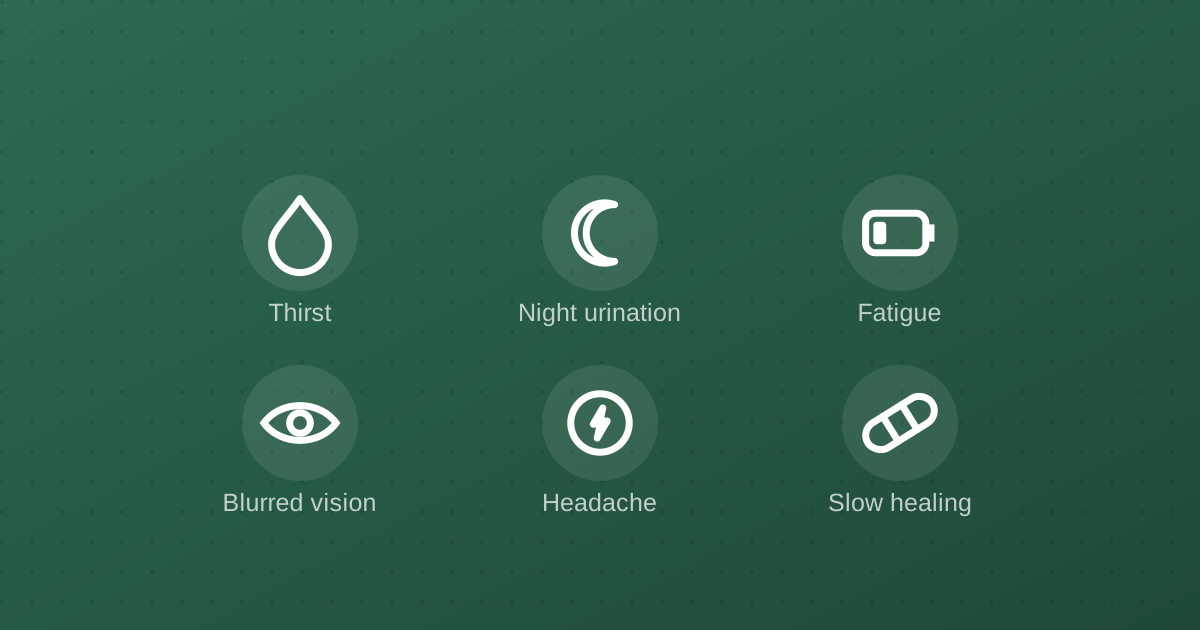
High Blood Sugar Symptoms: 12 Warning Signs You Shouldn't Ignore
Hyperglycemia rarely announces itself. It shows up as thirst you keep topping up, an afternoon that flattens you, and vision that blurs for a week. Here are the 12 signs worth knowing.
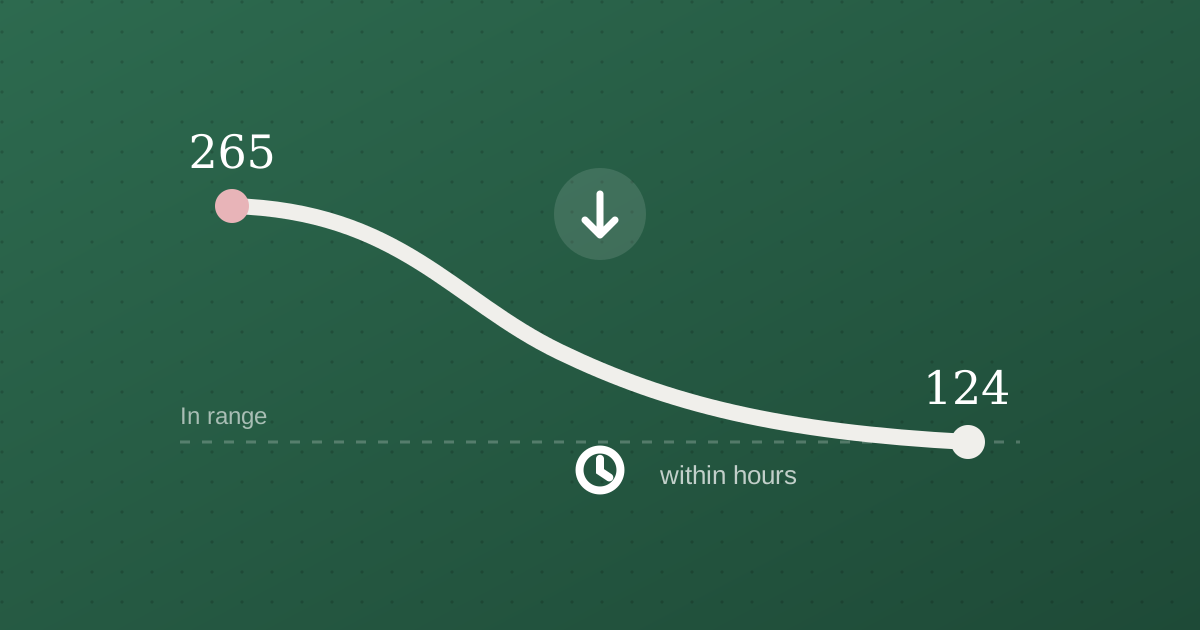
How to Lower Blood Sugar Quickly: 8 Evidence-Based Methods
Some things move glucose within the hour. Others take months but change the baseline. Here's what the evidence supports for each, and the point where self-management stops and medical help starts.
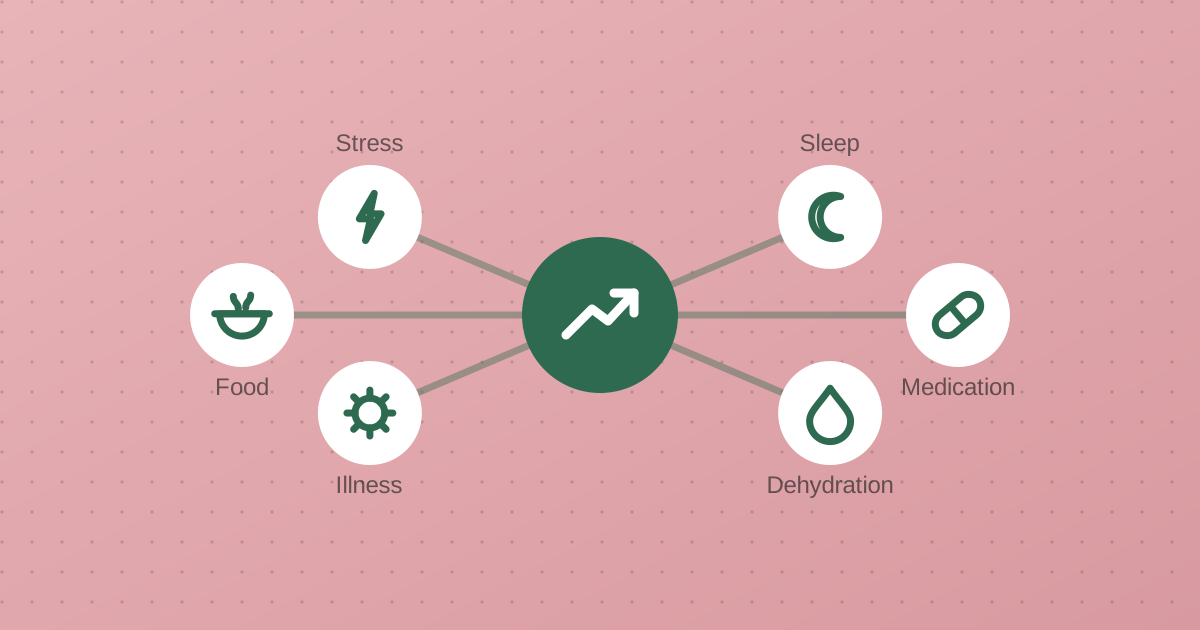
What Causes High Blood Sugar? 10 Common Triggers Explained
Food is the obvious answer and often the wrong one. Stress, a short night, a chest infection, a steroid injection and your own liver at 4am all raise glucose too.